
The world of search marketing is changing at a lightning pace. Over the past few years, the rise of AI-powered search engines and generative platforms like Google AI Overviews, Bing Copilot, and ChatGPT-style search interfaces has completely shifted how users find information. Traditional SEO—focused mainly on keywords, backlinks, and ranking pages—is no longer sufficient. Businesses now face a new challenge: being recognized, cited, and recommended by AI systems, not just appearing on the first page of search results.
This shift has introduced Generative Engine Optimization (GEO), a new approach that allows businesses to secure visibility, credibility, and authority in AI-generated answers. GEO is more than just an optimization tactic; it’s a strategic evolution of SEO designed for the AI era. In this comprehensive guide, we’ll explore what GEO is, why it’s essential, and how businesses can implement it effectively to dominate AI-driven search results.
What Is Generative Engine Optimization (GEO)?
Generative Engine Optimization, or GEO, is the process of optimizing your digital presence, content, and brand signals so that AI-powered search engines can understand, trust, and reference your business when generating answers for users.
Unlike traditional SEO, which primarily focuses on keywords, backlinks, and page rankings, GEO emphasizes trust, authority, and clarity. AI engines evaluate businesses based on factors such as entity recognition, experience, and factual accuracy. GEO ensures that your brand is one of the sources AI selects to provide answers, placing your business at the forefront of AI-driven search visibility.
For example, consider a local clinic in London. Traditional SEO may help the clinic appear on page one for “best dental clinic in London,” but GEO ensures that when a user asks, “Which dental clinic in London is most trusted for children?” the AI specifically cites and recommends this clinic because of the clinic’s consistent online presence, structured content, and verified customer reviews.
Key GEO Components:
- Entity Recognition: AI needs to understand your brand identity, offerings, and niche.
- Trust and Credibility: E-E-A-T signals (Experience, Expertise, Authoritativeness, Trustworthiness) are crucial.
- Structured Content: Schema markup, FAQs, and clearly organized information help AI parse your content.
- Contextual Relevance: AI evaluates how well your content matches user intent and search context.
In simple terms: While SEO helps your site rank, GEO ensures AI recommends your brand to users.
Why Generative Engine Optimization Matters

The shift toward AI-powered search is fundamentally changing how users interact with content. Users no longer navigate through multiple websites to find information. Instead, AI systems provide direct answers, often within the search interface itself. This presents both opportunities and risks for businesses.
Why GEO is critical:
- AI answers reduce traditional clicks: Users receive summarized answers directly, bypassing traditional search results. For instance, a user searching for “best SEO agency in uk” may receive a recommendation from AI without clicking on multiple websites.
- Only a small number of trusted sources are cited: AI algorithms favor authoritative and credible brands. Businesses that fail to establish trust may be ignored.
- AI recommendations strongly influence decisions: Users are more likely to trust businesses recommended by AI due to perceived authority.
- Non-recognized brands risk invisibility: Even if your website ranks on page one, a lack of trust signals means AI may not include it in responses.
Early adoption of GEO gives businesses a strategic advantage. By establishing your brand as a reliable and authoritative source, AI systems are more likely to cite your content, recommend your services, and even influence conversions.
How Generative Engines Work
To implement GEO effectively, businesses must understand how generative AI engines function. These engines operate differently from traditional search engines:
- Information Collection: AI crawls content across multiple sources, prioritizing authoritative and credible websites.
- Entity Recognition: AI identifies entities such as brands, organizations, products, and experts, forming a structured understanding of the digital landscape.
- Credibility Assessment: The AI evaluates trust using E-E-A-T signals, reviewing content accuracy, author expertise, and online reputation.
- Answer Generation: AI synthesizes information from multiple trusted sources to generate accurate, concise, and user-friendly answers.
Key Insight: AI does not randomly select content. Brands that consistently demonstrate authority, reliability, and relevance are more likely to be cited in generative responses.
GEO vs Traditional SEO

| Aspect | Traditional SEO | Generative Engine Optimization (GEO) |
|---|---|---|
| Primary Goal | Rankings | AI citations & recommendations |
| Focus | Keywords | Entities, trust, context |
| Traffic Model | Click-based | Answer-based |
| Authority Signal | Backlinks | Mentions, credibility, consistency |
| Content Style | Keyword-optimized pages | Expert, experience-driven, structured content |
Traditional SEO remains foundational, but GEO extends optimization into AI-driven discovery, ensuring brands are included in AI-generated answers.
The Role of E-E-A-T in GEO
E-E-A-T—Experience, Expertise, Authoritativeness, Trustworthiness—is the backbone of Generative Engine Optimization.
- Experience: AI favors content based on real-world experience, including case studies, customer success stories, and firsthand insights.
- Expertise: Deep, niche-specific knowledge signals authority to AI.
- Authoritativeness: Mentions in credible publications, news outlets, and industry portals enhance authority.
- Trustworthiness: Transparent business details, verified customer reviews, and accurate content help AI evaluate reliability.
Without strong E-E-A-T signals, GEO efforts are less likely to succeed, as AI prioritizes trust over simple ranking metrics.
Key Strategies for Generative Engine Optimization
1. Entity Optimization
Entity optimization ensures AI recognizes who your business is and what it offers.
- Maintain consistent brand information across platforms, including website, social media, and directories.
- Clearly define services, expertise, and product offerings to guide AI classification.
- Use structured data to explicitly define your business entity.
- Build associations with relevant topics, industries, and locations.
2. Structured Data and Schema Markup
Structured data helps AI understand content context, reducing ambiguity.
Recommended schema types for GEO:
- Article
- FAQ
- Organization
- LocalBusiness
- Product / Service
Proper implementation increases eligibility for AI summaries, voice search, and featured snippets, improving your chance of being cited.
3. Brand Mentions Over Backlinks
While backlinks are important, AI increasingly values mentions and citations.
How to build GEO authority:
- Mentions in industry publications
- Inclusion in expert quotes and interviews
- Publishing thought leadership content
- Coverage in news outlets and blogs
- Listings in trusted directories
Even unlinked mentions contribute to credibility. For AI, trust and recognition outweigh traditional link metrics.
4. Content Optimization for AI
AI favors long-form, authoritative, and experience-based content.
- Address real user questions directly
- Use structured headings, FAQs, and subtopics
- Provide conversational, natural language
- Include case studies, examples, and data-backed insights
Example:
Instead of “We provide SEO services,” say:
“We helped a Dhaka-based restaurant increase foot traffic by 40% using local SEO, Google Maps optimization, and review management.”
5. Conversational and Voice Search Optimization
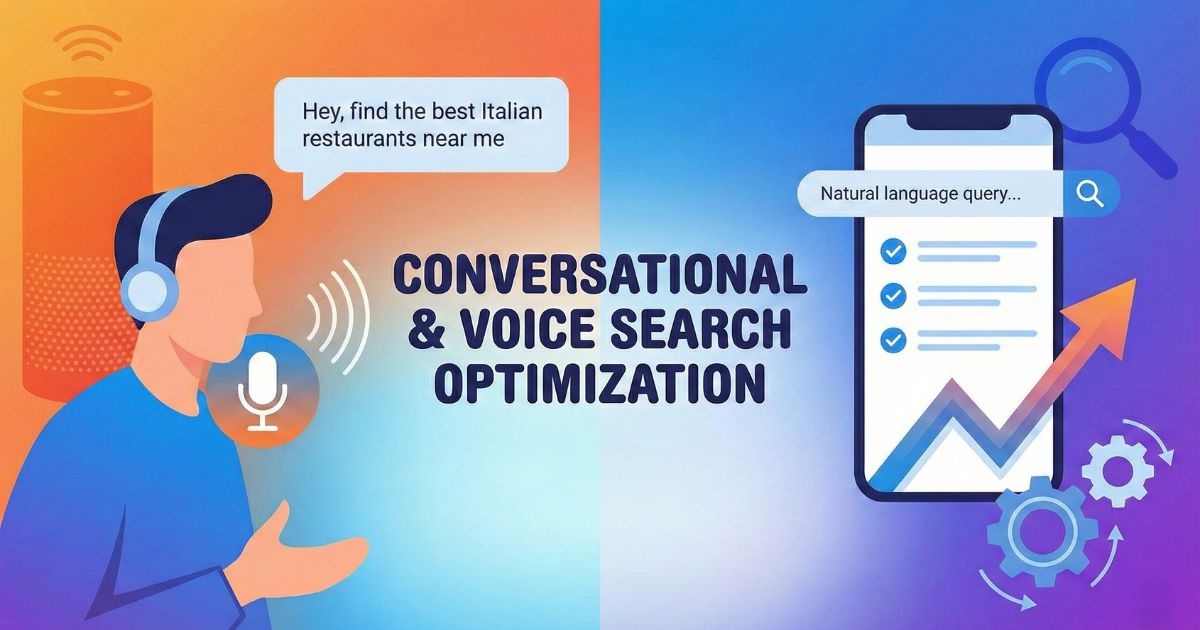
Generative search is question-oriented. Users type natural-language questions rather than keywords, so optimizing for conversational and voice queries is crucial for GEO.
Include FAQ sections that directly answer common user questions. For example, a restaurant could use: “What are your most popular dishes?” or “Do you deliver in London?” This helps AI extract precise answers.
Write in a conversational tone and provide concise, actionable answers. Clear, natural language and step-by-step guidance make your content more likely to be cited by AI systems.
Optimizing for conversational and voice search ensures your business is discoverable, trusted, and referenced in AI-generated answers.
6. Avoiding Common GEO Mistakes
Many businesses undermine their GEO efforts unknowingly:
- Keyword stuffing or over-optimization
- Publishing generic AI-generated content without review
- Lack of author or business credibility
- Inconsistent business information across platforms
- Ignoring structured data
- Over-reliance on backlinks alone
Generative engines are designed to detect low-quality, untrustworthy content, reducing its chance of being cited.
7. Measuring GEO Success
Unlike traditional SEO, GEO success isn’t measured only by page rankings or traffic:
- Mentions in AI-generated answers
- Visibility in AI summaries
- Increase in branded searches
- Higher-quality leads and conversions
- Improved trust and authority
Consistent implementation results in long-term AI-driven visibility.
8. The Future of SEO Is GEO
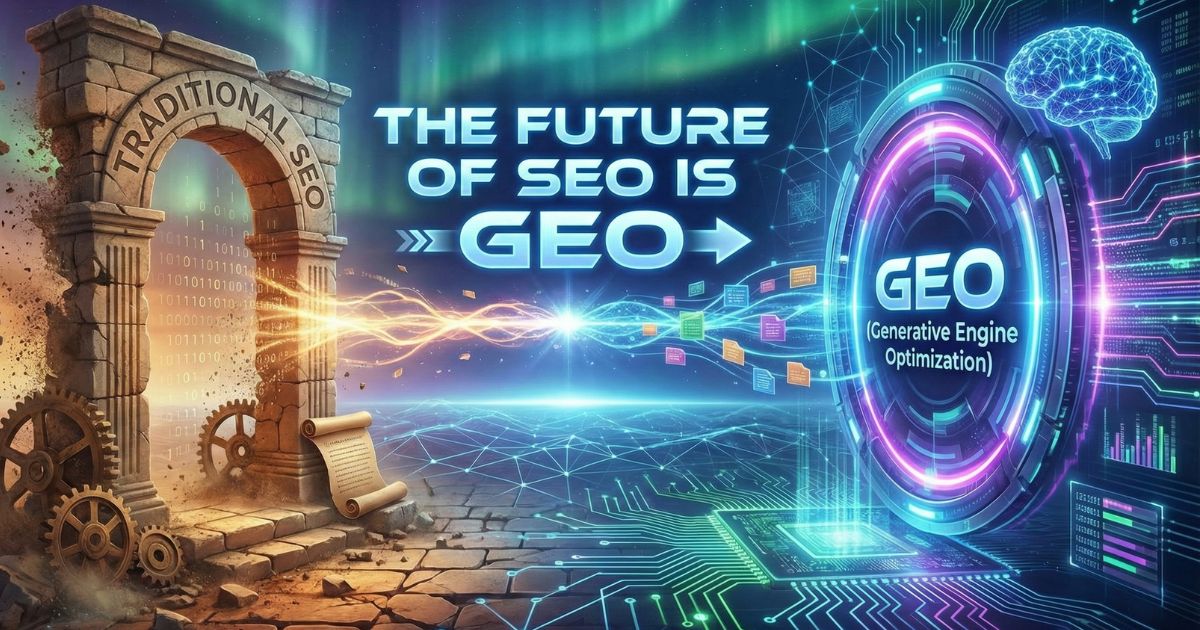
Generative Engine Optimization (GEO) doesn’t replace SEO—it evolves it for the AI era. In AI-driven search, fewer sources dominate answers, authority compounds over time, and weak or generic content is increasingly ignored.
Trusted brands gain disproportionate visibility. Businesses that adopt GEO early—by producing expert content, showcasing real-world experience, using structured data, and maintaining consistent, transparent information—position themselves as reliable entities. AI systems are more likely to cite, recommend, and reference these brands repeatedly, ensuring long-term visibility, credibility, and competitive advantage in an increasingly AI-powered search landscape.
Frequently Asked Questions (FAQ)
1. What is Generative Engine Optimization (GEO)?
Generative Engine Optimization (GEO) is the process of optimizing your digital content, brand presence, and online signals so that AI-powered search engines—like Google AI Overviews, Bing Copilot, and ChatGPT-style search—can recognize, trust, and cite your business. Unlike traditional SEO, which focuses on ranking web pages in search results, GEO ensures that your business becomes a reliable source for AI-generated answers. This involves creating authoritative content, structured data, consistent brand signals, and verified credibility, which helps AI systems confidently include your business when providing recommendations to users.
2. Is GEO different from traditional SEO?
Yes. Traditional SEO primarily aims to improve rankings, drive clicks, and increase website traffic through keywords, backlinks, and technical optimization. GEO, on the other hand, focuses on AI recommendations, citations, and trust. It ensures your business is included in AI-generated answers, summaries, and voice responses. For example, a local clinic may rank on Google for “best dentist in London,” but with GEO, AI might actively recommend the clinic when someone asks, “Which dental clinic in London is most trusted for children?” GEO extends SEO by aligning content and brand signals with how AI understands and references businesses.
3. Do small businesses need GEO?
Absolutely. GEO is particularly beneficial for small and local businesses, as it allows them to compete with larger brands even if their websites don’t dominate traditional search rankings. By demonstrating expertise, real-world experience, and transparent business information, small businesses can become trusted sources for AI systems. For instance, a small bakery in London can gain visibility by publishing detailed guides on baking, showing customer reviews, and optimizing local business information—making it more likely that AI will recommend it to nearby users.
4. Does GEO replace traditional SEO?
No. GEO complements traditional SEO, rather than replacing it. SEO remains essential for website visibility, technical performance, and ranking pages. GEO adds an extra layer by focusing on entity recognition, structured data, authoritativeness, and AI-readability. Think of SEO as helping search engines find and rank your website, while GEO ensures AI systems recognize, trust, and recommend your brand. Businesses that combine both strategies are best positioned to maintain long-term visibility and authority in the AI-powered search landscape.
5. How long does GEO take to show results?
Generative Engine Optimization is a long-term strategy. Some early signals—like improved content clarity, better structured data, and increased brand mentions—may appear within a few months. However, meaningful results, such as consistent AI recommendations and citations, usually take longer as AI systems continuously assess trust, authority, and credibility over time. Consistently producing expert content, maintaining accurate business information, and securing verified mentions or reviews compounds value, leading to sustainable visibility in AI-generated search results.
6. How can businesses measure GEO success?
Unlike traditional SEO, GEO success isn’t measured solely by rankings or traffic. Key indicators include:
- Inclusion in AI-generated summaries and answers
- Increased branded searches or queries
- Mentions and citations in trusted publications
- Improved online reputation and trust signals
- Higher-quality leads and engagement
Monitoring these metrics helps businesses track AI recognition and visibility, providing actionable insights to refine their GEO strategy.
Final Thoughts
Generative Engine Optimization (GEO) is no longer optional—it’s essential for businesses that want to thrive in an AI-driven search ecosystem. In today’s landscape, being trusted matters more than simply being ranked. Traditional SEO alone is no longer enough; AI favors sources that demonstrate credibility, authority, and real-world expertise.
Businesses that focus on real-world experience, expert content, structured entity signals, and transparent credibility increase their chances of being cited, referenced, and recommended by AI. Case studies, clear service descriptions, schema markup, and verified reviews all help AI recognize and trust your brand.
In an era where AI delivers direct answers, recommendations are the new form of visibility, and GEO ensures your business is both seen and trusted. Investing in GEO today builds long-term authority, consistent AI mentions, and a lasting competitive advantage.
Need help with GEO? SanMo UK offers tailored Generative Engine Optimization services to help your brand earn trust and visibility in AI-powered search.