Artificial intelligence is reshaping industries at an unprecedented pace, and software development is no exception. For business owners and tech leaders, the integration of AI is no longer a futuristic concept but a present-day necessity for staying competitive. It offers a powerful way to build smarter, more efficient, and highly personalised applications that can solve complex business challenges.
This guide will explore the transformative impact of AI in software development. We’ll break down what AI software development services entail, the significant benefits they bring to businesses, and how they are being applied across various industries. For those looking to build innovative solutions, understanding how an expert AI software developer can elevate your project is the first step toward unlocking new possibilities for growth and efficiency.
By the end of this post, you’ll have a clear picture of how AI-powered solutions can drive your business forward and how a partner like SanMo UK can help you navigate this exciting technological frontier.
What Are AI Software Development Services?
AI software development services involve using artificial intelligence technologies to design, build, and deploy custom software applications. Unlike traditional software that follows pre-programmed rules, AI-powered software can learn from data, recognise patterns, make predictions, and adapt its behaviour over time.
These services encompass a range of AI disciplines, including:
- Machine Learning (ML): Developing algorithms that allow software to learn from and make decisions based on data. This is the engine behind recommendation systems, predictive analytics, and much more.
- Natural Language Processing (NLP): Enabling software to understand, interpret, and generate human language. Chatbots, sentiment analysis tools, and voice assistants are all powered by NLP.
- Computer Vision: Giving applications the ability to “see” and interpret visual information from the world, such as images and videos. This is used in facial recognition, medical imaging analysis, and autonomous vehicles.
- Data Science and Analytics: Using advanced statistical methods and AI to extract actionable insights from large and complex datasets, helping businesses make smarter, data-driven decisions.
A provider of custom software development services specialising in AI doesn’t just write code; they build intelligent systems tailored to solve specific business problems, creating a unique competitive advantage for their clients.
The Key Benefits of AI in Software Development
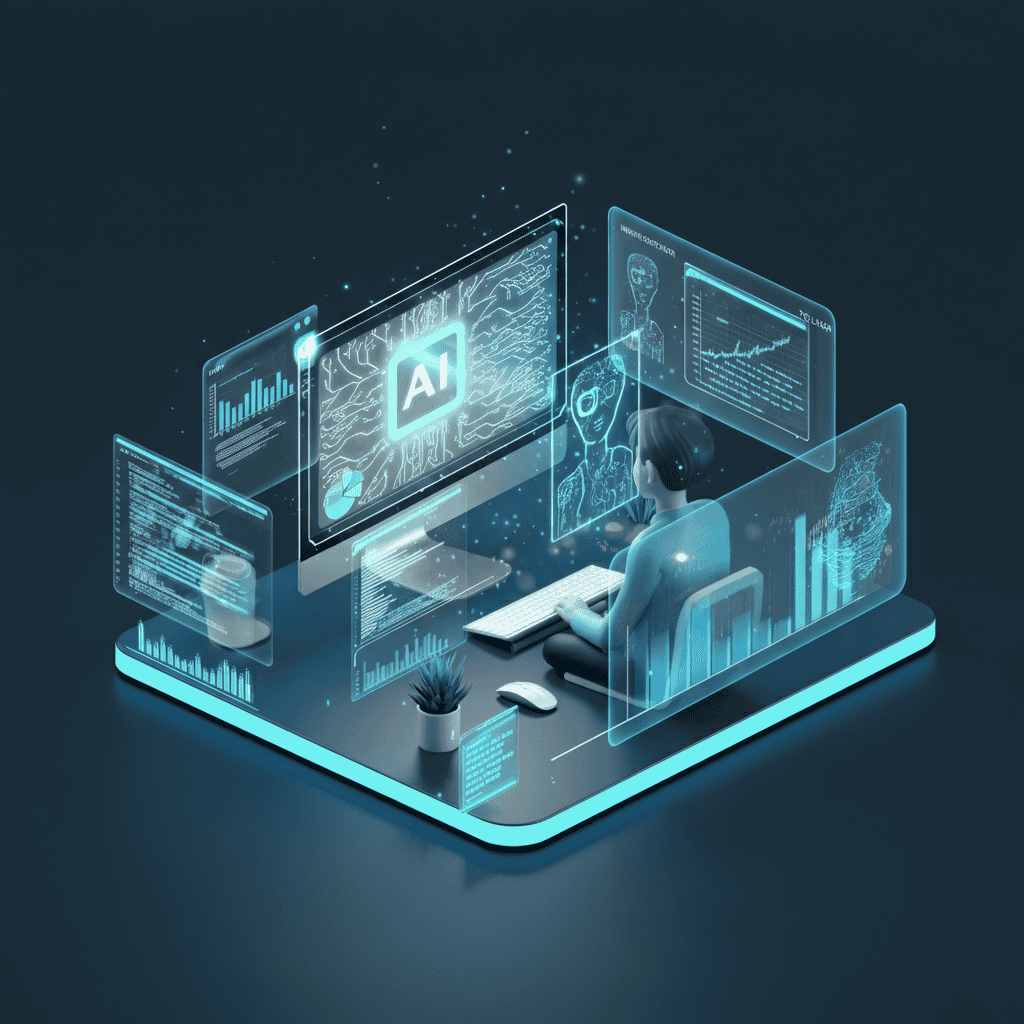
Integrating AI into the software development lifecycle offers more than just adding a “smart” feature. It fundamentally enhances the creation process and the final product, delivering tangible business benefits.
Enhanced Automation and Efficiency
One of the most immediate impacts of AI in software development is the automation of repetitive and time-consuming tasks. AI tools can handle everything from code generation and debugging to automated testing, freeing up developers to focus on more complex, strategic, and creative aspects of a project. This accelerated workflow not only speeds up the development cycle but also reduces the likelihood of human error, leading to a higher-quality final product.
Smarter, Data-Driven Decision-Making
AI excels at processing and analysing massive volumes of data at speeds impossible for humans. For businesses, this translates into deeper insights into customer behaviour, market trends, and operational performance. AI-powered software can present this data through intuitive dashboards and predictive models, empowering leaders to make more informed and strategic decisions. For example, an AI analytics platform can predict future sales trends based on historical data, allowing for better inventory management.
Unprecedented Personalization
Modern consumers expect personalised experiences. AI makes it possible to deliver this at scale. By analysing user data—such as browsing history, purchase patterns, and in-app behaviour—AI algorithms can tailor content, product recommendations, and user interfaces to individual preferences. This level of personalisation significantly boosts customer engagement, satisfaction, and loyalty. Think of Netflix’s recommendation engine or Amazon’s personalised product suggestions; this is AI in action.
Improved Quality and Reliability
AI tools can significantly improve software quality by identifying bugs, security vulnerabilities, and performance bottlenecks early in the development process. AI-driven testing can simulate thousands of user scenarios to ensure the application is robust and reliable before it goes live. This proactive approach to quality assurance saves time and money by preventing costly issues from emerging post-launch.
Creation of Innovative Features
Beyond optimising existing processes, AI enables the creation of entirely new features and capabilities that were previously unimaginable. From intelligent chatbots that provide 24/7 customer support to predictive maintenance software that alerts technicians before a machine fails, AI software development services open the door to innovation. These features can create new revenue streams, disrupt industries, and provide immense value to end-users.
Real-World Use Cases of AI-Powered Software
The applications of AI-driven software are vast and continue to grow. Here are a few practical examples of how different industries are leveraging custom AI solutions to their advantage.
- E-commerce: Online retailers use AI for dynamic pricing, fraud detection, and creating personalised shopping experiences. AI-powered recommendation engines analyse a customer’s browsing history to suggest products they are likely to buy, increasing sales and customer retention.
- Healthcare: In the medical field, AI is revolutionising diagnostics. Computer vision algorithms can analyse medical images like X-rays and MRIs to detect diseases such as cancer with a high degree of accuracy. AI also powers virtual health assistants that help patients manage their conditions.
- Finance: Banks and financial institutions rely on AI to detect fraudulent transactions in real time, assess credit risk for loans, and power robo-advisors that provide automated, algorithm-driven financial planning services.
- Manufacturing: AI-driven predictive maintenance systems monitor factory equipment and predict when a part is likely to fail. This allows for proactive maintenance, reducing downtime and saving high costs.
- Marketing: Marketing teams use AI to analyse customer data and segment audiences for highly targeted campaigns. AI can also automate social media posting, optimise ad spend, and generate marketing copy, improving campaign ROI.
Key Challenges and Considerations in AI Software Development
While AI offers tremendous potential, developing AI-powered software comes with its own set of challenges. Understanding these considerations can help businesses plan better and choose the right development partner.
AI software development requires careful attention to data quality, algorithm selection, ethical implications, and scalability. Neglecting these aspects can result in inefficient models, biased outcomes, or software that fails to deliver business value.
Common Challenges in AI Software Development
- Data Quality and Availability: AI models require large volumes of accurate and clean data. Incomplete or biased data can lead to poor decision-making.
- Model Complexity: Designing AI algorithms that deliver precise predictions without overfitting is technically demanding.
- Integration with Existing Systems: Seamlessly incorporating AI into legacy software can be complex and may require system redesign.
- Ethical and Regulatory Concerns: AI solutions must comply with data privacy regulations (like GDPR in the UK) and avoid biased or unfair decision-making.
- High Computational Requirements: Training AI models often requires significant computing power, which can increase costs.
Considerations for Successful AI Software Development
| Aspect | Why It Matters | Recommended Approach |
|---|---|---|
| Data Management | AI depends on high-quality data | Invest in data cleaning, annotation, and secure storage |
| Algorithm Selection | Impacts accuracy, efficiency, and interpretability | Choose algorithms aligned with business goals and data type |
| Scalability | Ensures AI software grows with your business | Use cloud infrastructure and modular architecture |
| Ethical Compliance | Avoids legal issues and protects brand reputation | Implement bias detection and adhere to regulations |
| Ongoing Monitoring & Updates | Maintains performance as data and environments change | Regularly retrain models and monitor key performance metrics |
By addressing these challenges early in the development process, businesses can maximise the ROI of AI software development and create solutions that are both innovative and reliable.
How to Choose the Right AI Software Development Partner
Embarking on an AI project requires a partner with more than just technical skills. Finding the right team is crucial for success. Here’s what to look for in an AI software developer or development company:
- Proven Expertise: Look for a company with a strong portfolio of successful AI projects. They should be able to demonstrate their experience with the specific AI technologies relevant to your needs, such as machine learning or NLP.
- Industry Knowledge: A partner who understands your industry’s unique challenges and opportunities will be better equipped to build a solution that delivers real business value.
- Collaborative Approach: The development process should be a partnership. Your chosen provider should work closely with you to understand your goals, provide regular updates, and incorporate your feedback throughout the project.
- Focus on Business Goals: The best AI solutions are not just technologically impressive; they are designed to solve a specific business problem and deliver a measurable return on investment. Ensure your partner prioritises understanding and achieving your business objectives.
- Full-Cycle Services: A partner who can guide you from the initial idea and strategy phase through to development, deployment, and ongoing support will provide a more seamless and integrated experience.
Future Trends in AI Software Development
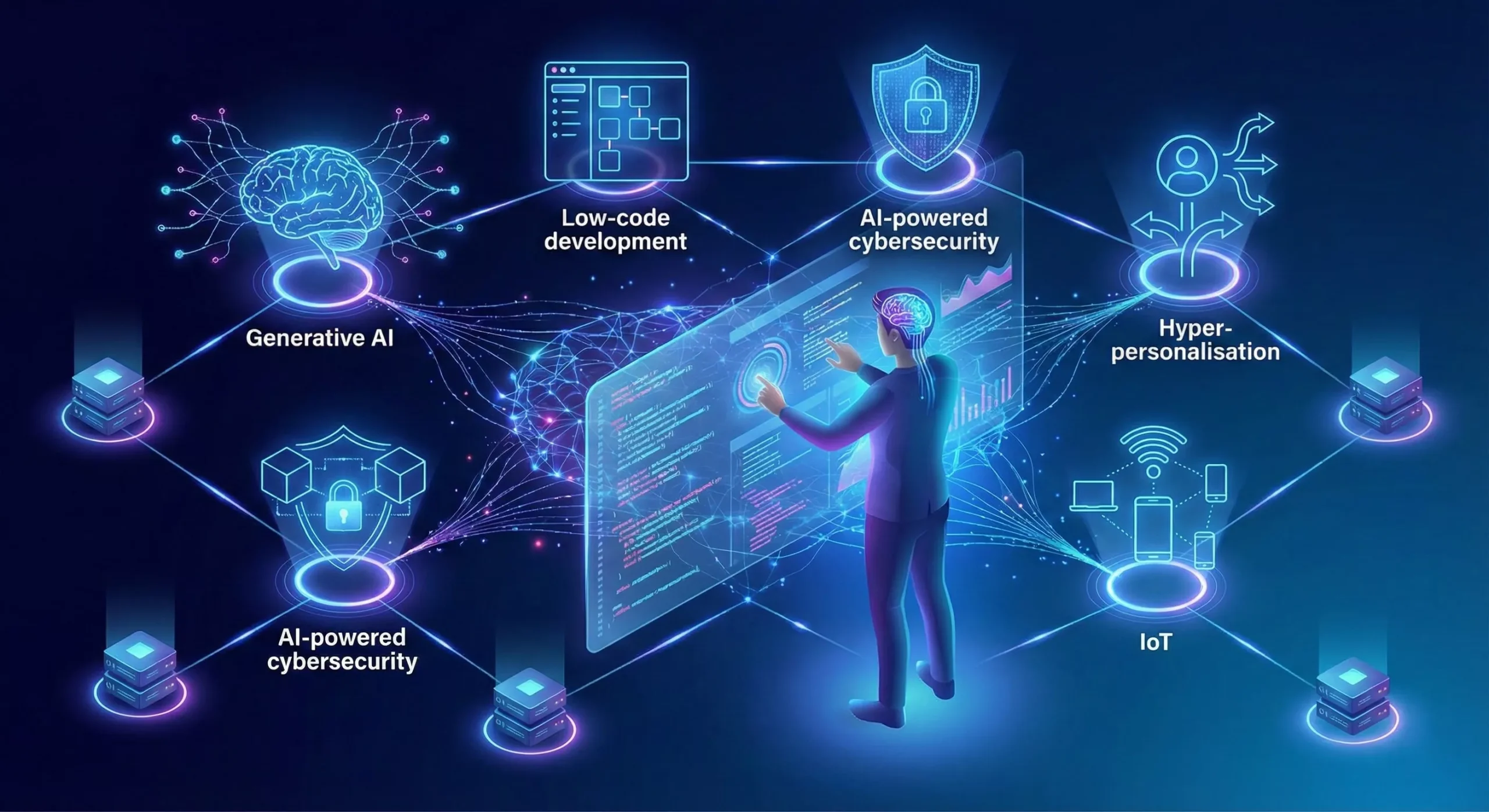
Artificial intelligence is evolving at a rapid pace, and businesses that stay ahead of emerging trends can gain a significant competitive advantage. Understanding these trends can help organisations plan long-term strategies and adopt AI solutions that remain relevant in the future.
1. AI-Powered Low-Code and No-Code Development
Low-code and no-code platforms are increasingly integrating AI to simplify software development. These tools allow non-technical users to create intelligent applications with minimal coding, speeding up development cycles and enabling faster experimentation.
2. Generative AI for Code and Design
Generative AI tools, such as AI code assistants, are revolutionising the way software is written. From generating boilerplate code to suggesting advanced algorithms, AI can accelerate development while reducing human errors. Additionally, AI-driven design tools can help create intuitive user interfaces automatically.
3. Explainable AI (XAI) in Applications
As AI becomes more embedded in critical business processes, transparency and accountability are essential. Explainable AI ensures that decisions made by AI systems are understandable to humans, increasing trust in automated processes across industries like finance, healthcare, and legal tech.
4. AI-Enhanced Cybersecurity
With increasing cyber threats, AI is playing a crucial role in identifying vulnerabilities, detecting anomalies, and preventing attacks in real-time. Future software solutions will rely heavily on AI to proactively secure data and infrastructure.
5. Hyper-Personalisation at Scale
AI will enable even more precise personalisation in software applications. By analysing complex behavioural and contextual data, AI can deliver highly customised experiences for users, from adaptive user interfaces to predictive analytics tailored to individual preferences.
6. Integration of AI with IoT and Edge Computing
The combination of AI, IoT (Internet of Things), and edge computing allows software to process data locally on devices, reducing latency and enabling real-time decision-making. This trend will be especially important in industries like smart manufacturing, autonomous vehicles, and healthcare monitoring.
7. Continuous Learning Systems
Future AI software will increasingly feature systems that continuously learn from user interactions and environmental data. This allows applications to adapt dynamically without requiring extensive manual updates, making software smarter over time.
Build Your Future with SanMo UK
Artificial intelligence is not just a trend; it is a fundamental shift in how businesses operate and innovate. By leveraging AI software development services, organisations can build intelligent, adaptive, and highly effective applications that drive efficiency, enhance decision-making, and create unparalleled customer experiences.
Whether you’re looking to automate internal processes, gain deeper insights from your data, or launch a groundbreaking new product, AI offers the tools to make it happen. The key is to start with a clear vision and partner with an expert team that can turn that vision into a reality.
At SanMo UK, we specialise in creating custom software development services powered by AI. Our team of expert developers and strategists works with businesses to design and build tailored solutions that solve real-world problems and deliver a strong competitive edge.
Ready to explore how AI can transform your business? Get in touch with us today for a consultation, and let’s build the future together.
Frequently Asked Questions (FAQs)
1. What is AI software development?
AI software development is the process of designing and building software applications that use artificial intelligence technologies like machine learning, natural language processing, computer vision, and data analytics to make intelligent, data-driven decisions and automate processes.
2. How can AI improve custom software applications?
AI enhances software by automating repetitive tasks, enabling smarter decision-making, delivering personalised user experiences, improving quality through predictive testing, and even creating innovative features that were previously impossible.
3. Which industries benefit most from AI-powered software?
AI software can transform nearly every industry, including:
- E-commerce: Personalized shopping experiences, recommendation engines, and fraud detection.
- Healthcare: Medical imaging analysis, diagnostics, and virtual health assistants.
- Finance: Fraud detection, credit scoring, and robo-advisors.
- Manufacturing: Predictive maintenance and real-time operational monitoring.
- Marketing: Automated campaign optimisation, customer segmentation, and AI content generation.
4. What skills should an AI software development team have?
An expert AI software development team should have:
- Strong knowledge of machine learning, NLP, computer vision, and data science.
- Experience with cloud platforms and AI frameworks like TensorFlow or PyTorch.
- Ability to integrate AI into business workflows and understand industry-specific challenges.
- Skills in software architecture, programming, and data engineering.
5. How long does it take to develop an AI-powered application?
The timeline depends on the project’s complexity. A simple AI feature can be integrated in a few weeks, while fully custom AI software with complex features may take several months.
6. Can AI software adapt over time?
Yes. AI systems can continuously learn from data and user interactions, improving performance and adapting to new conditions without extensive manual updates.
7. Why should I hire a professional AI software development company?
Partnering with experts ensures your software is built efficiently, securely, and with the right AI technologies. Professionals provide full-cycle services, including strategy, development, deployment, and ongoing optimization, which maximise ROI and reduce the risk of costly mistakes.
8. How does AI affect software cost and ROI?
While AI development can be a significant investment upfront, it often leads to higher ROI by increasing efficiency, reducing errors, automating processes, and enabling innovative features that drive revenue and customer satisfaction.