Your brand’s reputation spreads faster than wildfire in today’s interconnected world. One negative review, one social media complaint, or one misunderstood message can spiral into a full-blown crisis within hours. UK businesses face unique challenges in this landscape, from strict GDPR compliance requirements to the competitive nature of local markets.
Smart business owners understand that waiting for problems to surface is a recipe for disaster. The companies thriving in 2025 are those that have embraced proactive brand monitoring as their digital shield.
Understanding Modern Brand Threats
Brand threats have evolved beyond traditional customer complaints. Today’s risks come from multiple directions, often catching unprepared businesses off guard.
Social media platforms amplify voices in ways previous generations never experienced. A single disappointed customer can reach thousands of potential clients within minutes. Review sites carry enormous weight in purchasing decisions, with studies showing that over 90% of consumers read online reviews before making buying choices.
Competitor activity adds another layer of complexity. Rival businesses might engage in negative campaigns or attempt to hijack your brand conversations. Industry discussions can shift rapidly, leaving brands that aren’t actively listening behind the curve.
The speed of information spread means that damage control becomes exponentially more difficult once issues gain momentum. Proactive monitoring allows you to catch these situations while they’re still manageable.
The Proactive Monitoring Advantage

Forward-thinking UK businesses gain significant competitive advantages through systematic brand monitoring. Early detection transforms potential crises into manageable situations that often strengthen customer relationships.
When you identify concerns before they escalate, you demonstrate genuine care for customer experiences. This responsiveness builds trust and loyalty that passive competitors struggle to match.
Market intelligence flows naturally from comprehensive monitoring efforts. You’ll discover emerging trends, customer preferences, and industry shifts that inform strategic decisions. This insight proves invaluable for product development, marketing strategies, and business expansion plans.
Monitoring also reveals positive brand mentions that many businesses miss entirely. These opportunities for engagement and amplification can significantly boost your marketing effectiveness without additional advertising spend.
Strategic Implementation Framework
Successful brand monitoring requires systematic approaches rather than random checking. Start by identifying all the platforms where your brand might be discussed, including social media networks, review sites, forums, and news outlets.
Set up monitoring for various keyword combinations beyond just your business name. Include product names, key personnel, industry terms, and common misspellings. This comprehensive approach ensures you don’t miss important conversations.
Establish clear response protocols for different types of mentions. Positive feedback deserves acknowledgment and amplification. Neutral mentions might present engagement opportunities. Negative comments require swift, professional responses that address concerns constructively.
Regular reporting helps you track trends and measure the effectiveness of your monitoring efforts. Weekly summaries should highlight key developments, emerging patterns, and actionable insights that inform business decisions.
Technology and Tools Integration
Modern monitoring solutions offer sophisticated capabilities that manual searching simply cannot match. Advanced platforms use artificial intelligence to analyze sentiment, detect emerging issues, and prioritize urgent situations.
Integration with existing business systems streamlines workflow and ensures that relevant team members receive timely alerts. Customer service teams can respond faster when they’re automatically notified of complaints or questions.
Analytics features help you understand the broader context of brand mentions. You can track sentiment changes over time, identify influential voices in your industry, and measure the impact of marketing campaigns or business changes.
Many UK businesses benefit from combining automated tools with human oversight. Technology handles the heavy lifting of data collection and initial analysis, while human judgment interprets nuanced situations and crafts appropriate responses.
Measuring the ROI of Proactive Brand Monitoring

Proactive brand monitoring isn’t just a defensive strategy—it’s a measurable investment that delivers tangible business value. Understanding the return on investment (ROI) helps justify monitoring efforts and ensures your strategies remain aligned with broader business goals.
1. Quantifying Customer Engagement and Loyalty
By tracking responses to both positive and negative mentions, businesses can measure improvements in customer satisfaction and retention. Faster response times and personalized engagement often translate into higher repeat purchase rates and stronger customer loyalty. Surveys and sentiment analysis can help quantify these changes over time.
2. Reducing Crisis Management Costs
Crisis situations can be expensive—not just financially, but in terms of brand reputation and customer trust. Early detection prevents small issues from escalating into full-blown crises, saving significant time, resources, and potential lost revenue. Monitoring systems provide a clear record of interventions, showing exactly how proactive measures mitigated risks.
3. Driving Marketing Efficiency
Identifying positive mentions, trends, and influencer opportunities allows businesses to amplify brand advocacy without additional advertising spend. Tracking these interactions demonstrates how monitoring directly contributes to organic reach, engagement, and lead generation.
4. Informing Strategic Decisions
Data collected from monitoring can guide product development, market positioning, and competitive strategy. By connecting insights to business outcomes—such as increased sales from a new product tweak or a successful campaign inspired by customer feedback—you can demonstrate the strategic ROI of monitoring.
5. Benchmarking Progress Over Time
Regular reporting of key metrics—sentiment scores, volume of mentions, response times, and engagement rates—enables businesses to benchmark their progress. Over months and years, these benchmarks reveal patterns and improvements that underscore the long-term value of proactive brand monitoring.
Ultimately, ROI isn’t just about immediate financial gain—it’s about building a resilient, informed, and customer-focused business that is prepared for whatever the future holds. With measurable results, UK businesses can clearly see that proactive brand monitoring is not an optional expense—it’s a strategic investment in sustained growth and protection.
Key Metrics and KPIs for Effective Brand Monitoring
Proactive brand monitoring is most impactful when it’s measurable. Tracking the right metrics ensures that your efforts translate into meaningful insights and business outcomes. Monitoring KPIs helps identify trends, assess performance, and refine strategies for maximum effectiveness.
Businesses should focus on a combination of quantitative and qualitative metrics that cover reputation, customer engagement, and competitive intelligence. By consistently reviewing these indicators, you can detect early warning signs, highlight opportunities, and demonstrate the value of monitoring to stakeholders.
Critical Metrics to Track:
- Volume of Mentions: Track how often your brand, products, or key personnel are mentioned online to gauge overall visibility.
- Sentiment Analysis: Monitor positive, neutral, and negative mentions to understand public perception.
- Response Time: Measure how quickly your team responds to customer inquiries or complaints.
- Engagement Rate: Analyze interactions such as likes, shares, comments, and retweets to evaluate audience interest.
- Share of Voice: Compare your brand mentions to competitors to understand your market position.
- Emerging Trends: Identify recurring themes or topics in customer discussions to guide strategic decisions.
The following table provides a clear overview of essential KPIs, their purpose, and how often they should be reviewed:
| KPI / Metric | Purpose / Insight | Recommended Review Frequency |
|---|---|---|
| Volume of Mentions | Measures overall visibility and brand reach | Weekly |
| Sentiment Analysis | Tracks public perception and identifies potential issues | Weekly |
| Response Time | Ensures timely engagement and improves customer satisfaction | Daily / Weekly |
| Engagement Rate | Assesses audience interaction and content effectiveness | Weekly / Monthly |
| Share of Voice | Compares your presence to competitors | Monthly |
| Emerging Trends | Identifies opportunities for product, marketing, or service improvements | Monthly |
| Influencer / Key Voice Tracking | Identifies individuals with a strong influence on brand discussions | Monthly |
By monitoring these KPIs consistently, UK businesses can make data-driven decisions, allocate resources efficiently, and ensure that proactive brand monitoring delivers measurable ROI. The combination of quantitative data and qualitative insights allows teams to respond strategically, protect reputation, and uncover new opportunities for growth.
Crisis Prevention Through Early Detection
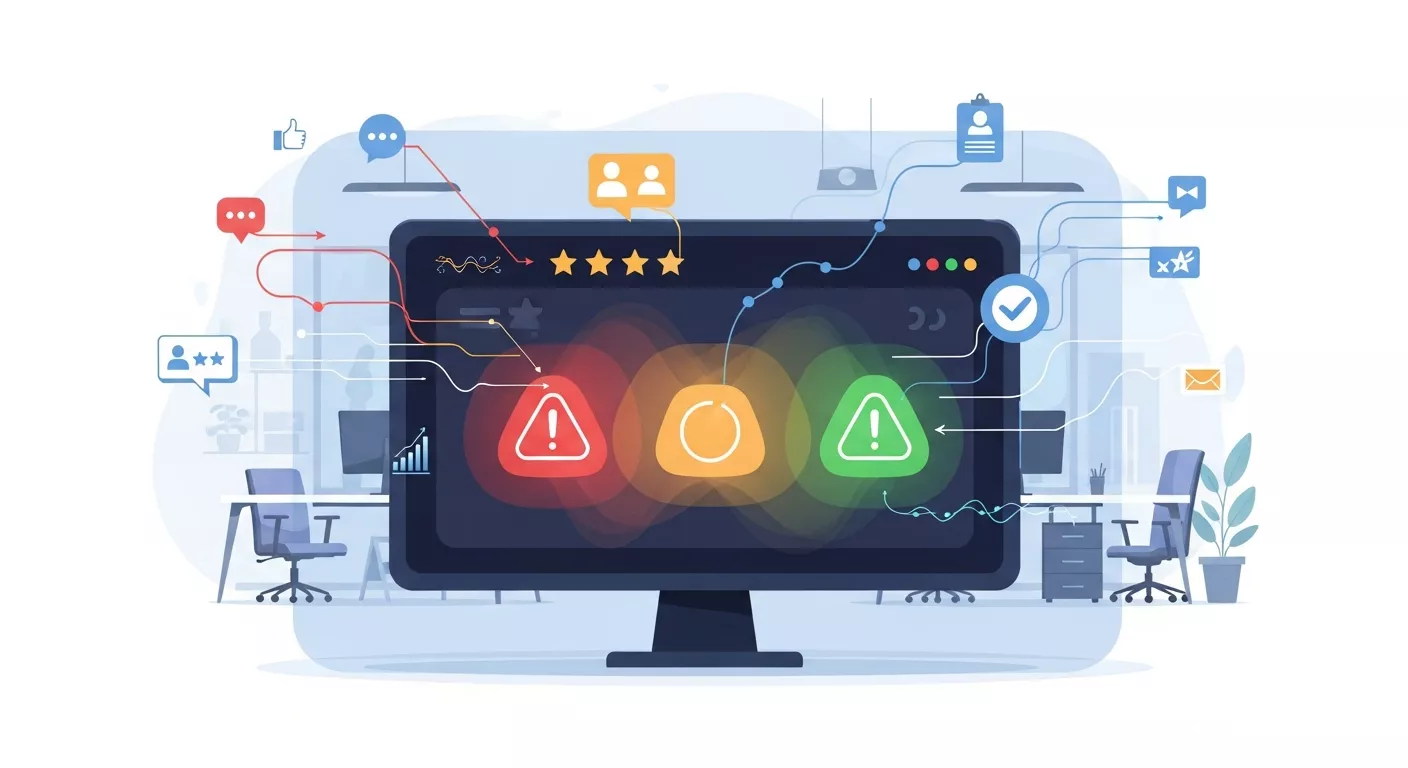
The most valuable aspect of proactive monitoring lies in crisis prevention rather than crisis management. When you catch potential problems early, you can often resolve them privately before they become public issues.
Consider a scenario where a customer posts a complaint on social media. Traditional reactive approaches might miss this post until it gains significant traction. Proactive monitoring allows you to respond within hours, often turning a frustrated customer into a brand advocate.
Supply chain issues, product defects, or service problems frequently surface through customer conversations before they become widespread problems. Early detection gives you time to investigate, implement fixes, and communicate transparently with affected customers.
Regulatory compliance issues also benefit from proactive monitoring. UK businesses operating under GDPR and other regulations can identify potential compliance discussions or concerns before they attract regulatory attention.
Building Competitive Intelligence
Brand monitoring extends far beyond protecting your reputation. It provides invaluable intelligence about competitor activities, industry trends, and market opportunities.
When competitors launch new products, change pricing strategies, or face their own challenges, monitoring systems capture this information quickly. This intelligence informs your strategic decisions and helps you identify market gaps.
Industry conversations reveal emerging customer needs, regulatory changes, and technological developments that could impact your business. Companies that stay ahead of these trends position themselves advantageously for future growth.
Customer discussions about competitor products highlight strengths and weaknesses in the marketplace. This information guides product development efforts and marketing messaging to address unmet customer needs.
Long-term Business Protection
Proactive brand monitoring creates a protective barrier around your business reputation that strengthens over time. Consistent monitoring and responsive engagement build positive relationships with customers, influencers, and industry stakeholders.
This approach helps establish your business as customer-focused and professional. When crises do occur, your established reputation for responsiveness and transparency provides significant protection against lasting damage.
Documentation of monitoring efforts also supports legal protections in cases of defamation or unfair business practices. Having records of brand mentions and your responses demonstrates good faith efforts to address concerns professionally.
The data collected through monitoring efforts becomes increasingly valuable for strategic planning. Historical trends help predict future challenges and opportunities, enabling more informed business decisions.
Take Action Today with SanMo UK
Your brand’s reputation is your most valuable asset. In today’s fast-paced digital landscape, waiting for issues to appear can be costly. SanMo UK helps businesses like yours stay ahead by providing proactive brand monitoring, protecting your reputation, and turning insights into growth opportunities.
How SanMo UK Can Help:
- Comprehensive Brand Audits: Discover where your brand is mentioned across social media, review sites, forums, and news outlets.
- Smart Monitoring Tools: Leverage AI-powered platforms that track mentions, sentiment, and emerging trends in real time.
- Expert Response Protocols: Receive guidance and training to respond quickly and professionally to every customer interaction.
- Actionable Insights: Use KPIs and analytics to make informed decisions, improve engagement, and identify opportunities before your competitors do.
Future-proof your UK business today. With SanMo UK, you can turn potential challenges into competitive advantages.
Future-Proofing Your Success
The businesses that will thrive in an increasingly connected world are those that embrace proactive brand monitoring as an essential business function. This approach transforms potential vulnerabilities into competitive advantages while building stronger customer relationships.
Starting your monitoring efforts today positions your UK business for sustained success in tomorrow’s marketplace. The investment in proactive systems pays dividends through prevented crises, enhanced customer loyalty, and strategic insights that drive growth.
Your brand’s future depends on the actions you take today. Make proactive monitoring the foundation of your business protection strategy and watch your competitive position strengthen over time.
Frequently Asked Questions (FAQ)
1. What is proactive brand monitoring?
Proactive brand monitoring is the continuous tracking of your brand’s presence across online platforms, including social media, review sites, forums, and news outlets. It involves identifying mentions, sentiment, and trends early to prevent potential issues and capitalize on opportunities.
2. Why is proactive monitoring important for UK businesses?
UK businesses face strict regulations like GDPR and operate in competitive markets where reputation spreads quickly. Proactive monitoring helps prevent crises, ensures compliance, strengthens customer relationships, and provides valuable market intelligence.
3. Which platforms should I monitor for brand mentions?
All platforms where your customers, competitors, or industry influencers interact should be monitored. This includes social media (Twitter, LinkedIn, Instagram), review sites (Trustpilot, Google Reviews), forums, blogs, and news outlets.
4. Can small businesses benefit from brand monitoring, or is it just for large enterprises?
Absolutely. Even small businesses can gain competitive advantages, build customer trust, and identify trends early. Tools range from simple solutions like Google Alerts to advanced AI-driven platforms, so monitoring can fit any budget.
5. How do I measure the effectiveness of brand monitoring?
Key metrics include volume of mentions, sentiment analysis, response times, engagement rates, share of voice, and emerging trends. Tracking these KPIs over time helps quantify ROI and refine your strategy.
6. What is the difference between reactive and proactive monitoring?
Reactive monitoring responds to issues after they occur, often under pressure. Proactive monitoring identifies potential concerns early, allowing timely action before problems escalate, preventing reputational or financial damage.
7. How can brand monitoring prevent crises?
By tracking mentions in real time, you can address negative feedback, customer complaints, or misinformation immediately. Early detection allows private resolution, corrective action, or public clarification before the situation spreads widely.
8. Should I rely solely on technology for monitoring?
No. Combining automated tools with human oversight is most effective. Technology collects and analyzes data at scale, while humans interpret nuances, craft appropriate responses, and make strategic decisions.
9. How often should monitoring reports be reviewed?
Some metrics, like response times or urgent complaints, should be reviewed daily. Others, like sentiment trends, share of voice, and emerging patterns, can be reviewed weekly or monthly, depending on business needs.
10. How do I get started with proactive brand monitoring?
Start by auditing your current online presence, selecting monitoring tools that fit your business, and setting up clear protocols for responding to mentions. Train your team and ensure consistent review and reporting for maximum impact.