
When it comes to boosting your site’s SEO and authority, link building is one of the most effective tactics around. But if you’re like most people, you’ve probably noticed there’s a big difference between ethical link-building practices—the ones that feel right and genuinely benefit everyone involved—and the shady, manipulative strategies that may promise quick results but ultimately damage your site’s reputation.
So, what exactly is ethical link building? Simply put, ethical (or “white-hat”) link building is about earning links naturally by creating valuable content and forming real connections. Instead of playing tricks with search engines, it’s about focusing on quality over quantity, building relationships, and offering genuine value to readers and other website owners alike. In this article, we’ll explore what ethical link building looks like and share some of the best methods to help you build your website’s authority the right way.
What is Ethical Link Building?
Ethical link building is about building relationships and creating useful, high-quality content that naturally attracts links. By following search engine guidelines and respecting other creators, you not only avoid the risk of penalties but also establish credibility with your audience.
Why is this important? Ethical link building builds trust, attracts relevant traffic, and supports long-term growth for your site. It’s about nurturing a sustainable backlink profile that search engines (and people) respect.
Tried-and-True Ethical Link Building Strategies
Here are some ethical link-building strategies that focus on building relationships, credibility, and lasting value for your audience.
- Create High-Quality Content People Want to Link To
Quality content is the heart of ethical link building. When you produce content that informs, entertains, or solves a problem, people are naturally inclined to link to it. This can be anything from insightful blog posts and data-backed studies to visually appealing infographics and how-to guides. The key here is to provide real value that others want to share. - Guest Posting on Reputable Sites
Guest posting is an excellent way to build both links and connections with new audiences. But it’s essential to approach guest posting with authenticity:- Find sites that align with your audience and industry.
- Offer content that genuinely benefits the host site’s readers, not just your SEO goals.
- Focus on quality over quantity; a handful of high-quality guest posts can be more beneficial than dozens of low-value ones.
- Build Relationships with Industry Influencers
Establishing relationships with respected figures in your industry can lead to natural link-building opportunities. You can start by connecting with them on social media, sharing their work, and offering valuable insights in relevant discussions. Over time, these relationships can result in organic backlinks when influencers recognize your content as worth mentioning. - Find Resource Pages in Your Niche
Many websites, especially those in educational or nonprofit sectors, maintain resource pages with curated lists of helpful content. If you have valuable resources that align with their focus, reaching out to suggest your content can be a great way to earn high-quality links. - Collaborate on Content with Other Brands or Influencers
Co-creating content, such as blog posts, research papers, or infographics, is a win-win way to reach broader audiences and earn quality links. Both you and your collaborator share the content, generating traffic and interest from both parties’ networks. This collaboration boosts credibility for both brands and offers readers a fresh perspective. - Use Broken Link Building
Broken link building is a simple yet powerful strategy. Here’s how it works: You find broken links on reputable websites, then reach out to the site owner and offer your content as a replacement. This not only helps the website fix its dead links but also earns you a valuable link. Tools like Ahrefs or SEMrush can help you find broken links in your industry. - Make the Most of Social Media
While social media links may not directly impact SEO, they’re an excellent way to get your content seen by a broader audience. This can lead to more shares and potentially more natural backlinks. Engage with your audience, participate in relevant conversations, and encourage sharing to expand your reach.
Advanced Outreach Techniques for Ethical Link Building
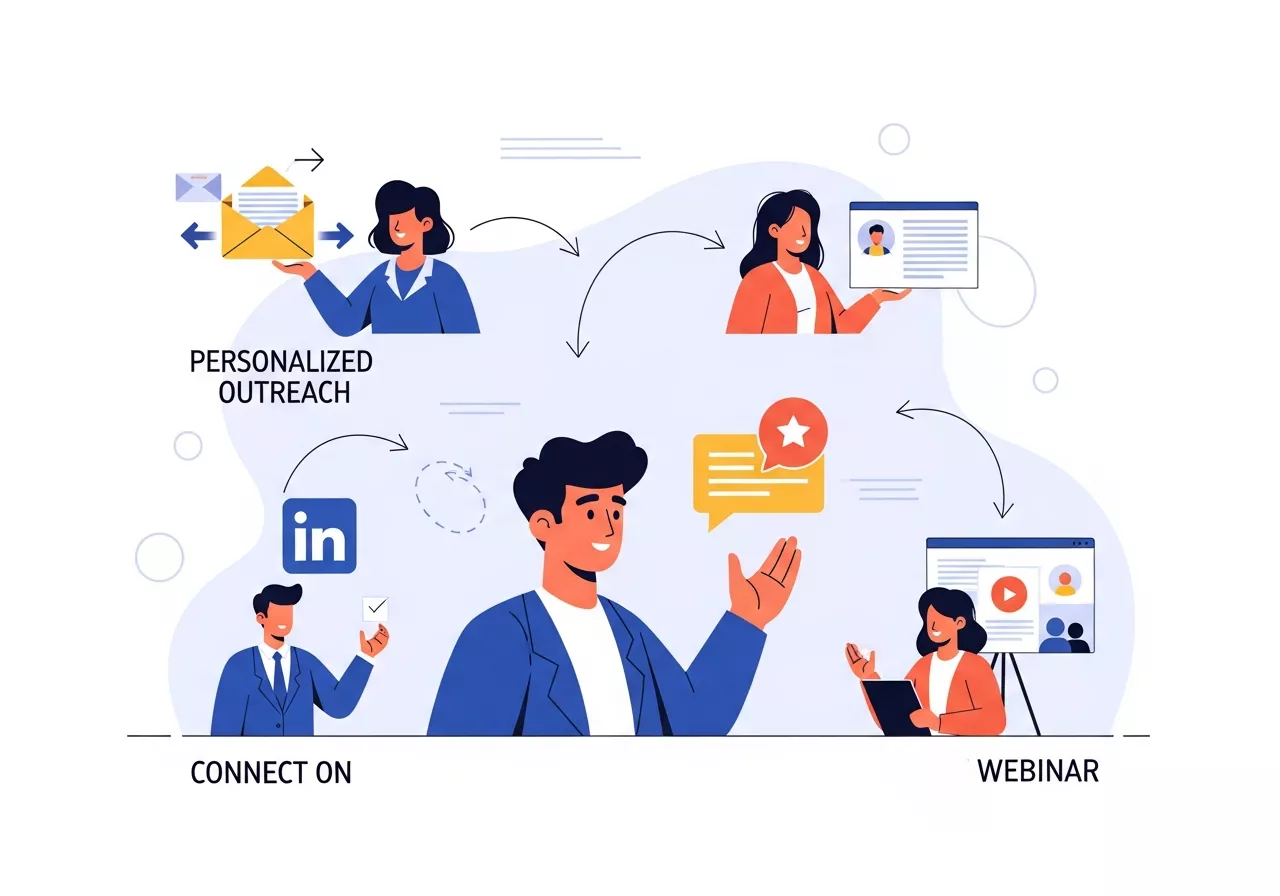
Building authority through links isn’t just about creating great content—it’s about connecting with the right people. Outreach done ethically strengthens relationships and earns high-quality backlinks.
1. Personalised Email Outreach
Generic outreach emails rarely work. Personalisation demonstrates that you understand the recipient’s content and audience. Include:
- A brief introduction of yourself or your brand
- Why your content is relevant to them
- How linking to your resource benefits their readers
2. Leveraging LinkedIn and Professional Networks
LinkedIn is a powerful tool for B2B link building. Engage with industry professionals by:
- Commenting on posts and sharing insights
- Connecting with content creators in your niche
- Offering collaboration opportunities
3. Offering Testimonials
Many businesses love featuring client or user testimonials on their website. Providing authentic testimonials can lead to:
- A backlink to your website
- Increased brand visibility
- Stronger business relationships
4. Hosting Webinars and Online Events
Collaborating on webinars or online events with other brands or influencers provides content that can be referenced later, earning backlinks naturally.
Ethical Outreach Tactics and Expected Results
| Outreach Method | How to Execute | Benefits | Time to See Results |
|---|---|---|---|
| Personalised Emails | Tailor emails to each recipient | High-quality links & relationship-building | 2–6 weeks |
| LinkedIn Engagement | Connect, comment, share content | Authority building & networking | 1–3 months |
| Testimonials | Provide authentic endorsements | Earn backlinks from trusted brands | 1–4 weeks |
| Webinars & Online Events | Co-host events with industry partners | Organic backlinks & traffic | 1–2 months |
Avoiding Unethical Link-Building Tactics
While building links ethically is essential, it’s just as important to avoid tactics that search engines frown upon. Here are a few practices to avoid:
- Buying Links: Paying for links is a quick way to get in trouble with search engines. Instead, focus on earning links by creating valuable content.
- Using Private Blog Networks (PBNs): PBNs may seem tempting because they offer links quickly, but they’re a risky shortcut that can lead to severe penalties.
- Automated Link Building: Automated tools that create links in bulk often result in spammy, irrelevant links that harm your site.
- Excessive Link Exchanges: While some link exchanges with industry peers can be okay, overdoing it can look manipulative. Focus on natural exchanges that make sense for your audience.
Measuring Success with Ethical Link Building
Once you start building links ethically, how do you measure success? Here are some indicators to keep an eye on:
- Domain Authority (DA): If your site’s DA is increasing, it often means you’re earning quality links.
- Referral Traffic: Are the sites linking to you driving relevant traffic? Look at your analytics to see how much and what type of traffic these links generate.
- Search Rankings: As your backlink profile grows, you may notice your content ranking higher for target keywords.
- New Backlink Acquisition: Track the new backlinks you’re earning to see if people are linking to your content without you needing to ask—a great sign of organic success!
Ethical Link Building Metrics and Tools
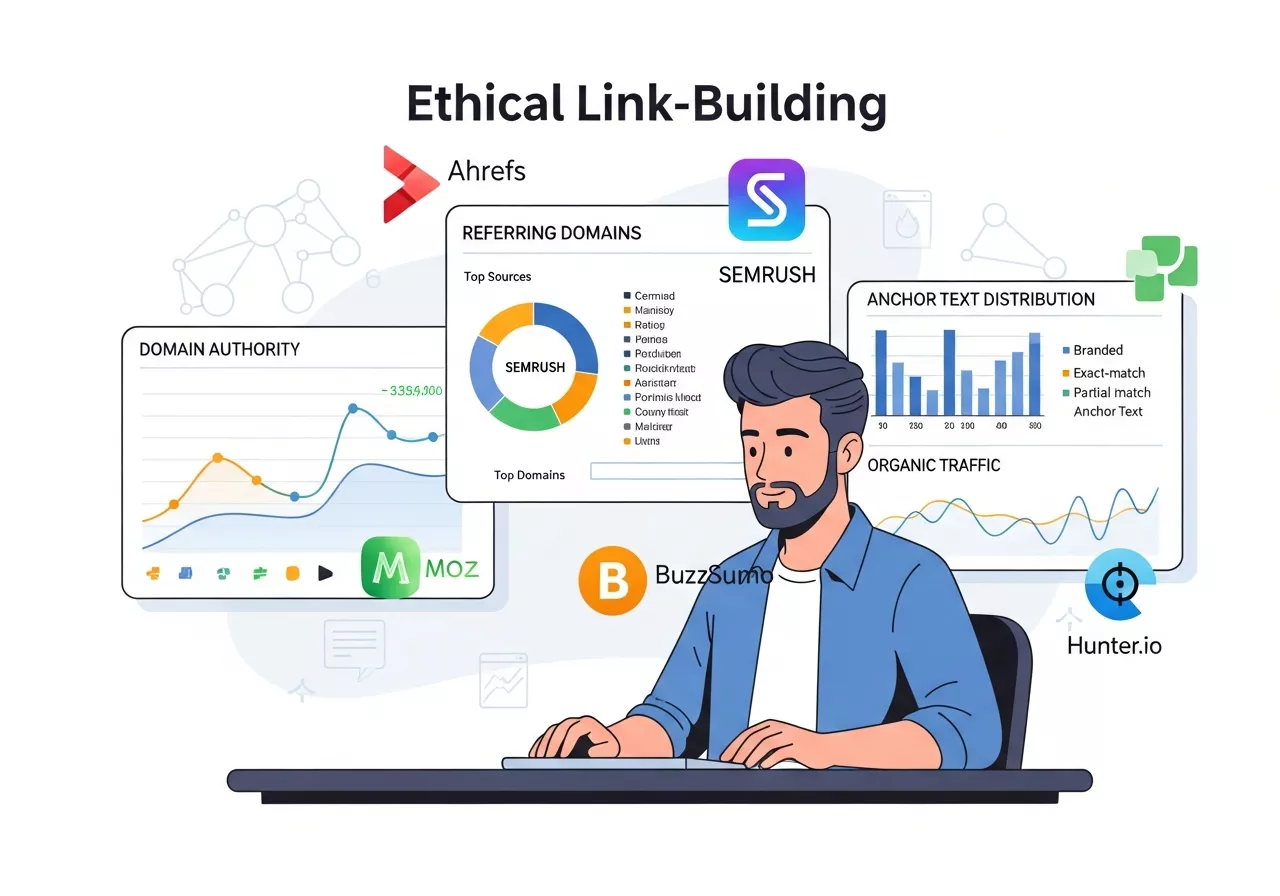
Measuring the impact of ethical link building ensures that your strategy is effective and sustainable.
1. Key Metrics to Track
- Domain Authority (DA): Measures the overall authority of your site. Higher DA often results from quality backlinks.
- Referring Domains: Count the number of unique websites linking to your content. Diversity is key.
- Anchor Text Distribution: Ensure your links use varied, natural anchor texts. Over-optimisation can be harmful.
- Organic Traffic Growth: Backlinks from high-quality sites should result in relevant traffic.
- Conversion Metrics: Track whether referral traffic leads to desired actions like sign-ups, purchases, or downloads.
2. Tools for Ethical Link Building
Many tools make monitoring and building links more efficient:
| Tool | Purpose | Key Features |
|---|---|---|
| Ahrefs | Backlink analysis | Check referring domains, broken links, competitors’ backlinks |
| SEMrush | Outreach & link monitoring | Track new links, evaluate domain authority, and find guest post opportunities |
| Moz Link Explorer | Authority metrics | Domain authority, spam score, link profile analysis |
| BuzzSumo | Content research | Identify popular content & potential linkers |
| Hunter.io | Email discovery | Find emails for outreach to relevant websites |
3. Using Metrics to Adjust Strategy
Regularly review the metrics to:
- Identify high-performing content that attracts links
- Find link opportunities in your niche
- Remove or disavow spammy or low-quality links
- Adjust your outreach or content creation strategy
Common Ethical Link Building Mistakes and How to Avoid Them
Even experienced marketers sometimes fall into ethical traps. Understanding common mistakes can save time, resources, and your site’s reputation.
1. Over-Focusing on Quantity Over Quality
Getting hundreds of low-value links is tempting, but search engines prioritize quality over quantity. Focus on backlinks from authoritative, relevant websites.
2. Ignoring Content Alignment
Links should come from sites relevant to your niche. Irrelevant backlinks may appear manipulative and dilute your authority.
3. Using Generic Outreach
Mass emails or impersonal pitches are often ignored. Personalised and thoughtful communication is essential for ethical link building.
4. Neglecting Internal Linking
Many bloggers forget to optimise internal links. Strong internal linking:
- Improves SEO
- Helps distribute authority across pages
- Enhances user experience
5. Forgetting to Track Results
Not monitoring your backlink profile may allow spammy links to accumulate, harming your authority over time.
Ethical Link Building Mistakes vs. Correct Practices
| Mistake | Consequence | Ethical Alternative |
|---|---|---|
| Mass email outreach | Low response, potential spam flag | Personalised, targeted outreach |
| Buying links | Risk of penalties, loss of credibility | Earn links through content value & relationship-building |
| Ignoring relevance | Weakens SEO, low engagement | Only target niche-relevant sites |
| Overlooking internal links | Missed SEO opportunities | Strategically link pages internally |
| Not tracking backlinks | Missed insights, potential harm | Use tools like Ahrefs or SEMrush to monitor links |
Final Thoughts on Ethical Link Building
Ethical link building isn’t the fastest path to SEO success, but it’s by far the most sustainable. Building authority the right way through quality content, genuine relationships, and targeted outreach will strengthen your online presence, build credibility, and create a solid foundation for long-term growth. By focusing on ethical link-building strategies, you’re not just improving your search rankings—you’re building a brand that people respect and trust.
Want to Build Authority the Right Way?
At SanMo UK, we specialise in ethical link-building strategies that help your website grow sustainably. From high-quality guest posting and outreach to content creation and SEO optimisation, we focus on strategies that boost your search rankings, increase referral traffic, and strengthen your brand’s credibility—all without risking penalties.
Start growing your online authority today!
Partner with SanMo UK to implement proven, ethical link-building tactics that deliver long-term results.
Contact us now for a personalised consultation and see how we can help your site earn authority the right way.
FAQ: Ethical Link Building & Building Authority
1. What is ethical link building?
Ethical link building (also called white-hat link building) is the process of earning backlinks naturally through high-quality content, genuine relationships, and relevant outreach. Unlike black-hat tactics, it follows search engine guidelines and prioritises value for readers and website owners.
2. Why is ethical link building important?
Ethical link building:
- Builds long-term trust with search engines and users
- Attracts relevant, high-quality traffic
- Enhances brand credibility and authority
- Reduces the risk of penalties from search engines
3. What are some effective ethical link-building strategies?
- Creating high-quality content that others naturally want to link to
- Guest posting on reputable websites
- Building relationships with industry influencers
- Collaborating with other brands or creators
- Finding resource pages in your niche
- Using broken link building techniques
4. How do I measure the success of my link-building efforts?
Key metrics include:
- Domain Authority (DA) growth
- Number of referring domains
- Organic referral traffic
- Search ranking improvements
- New backlinks earned without outreach
Tools like Ahrefs, SEMrush, Moz, and BuzzSumo can help track these metrics.
5. Can I buy links or use PBNs for faster results?
No. Buying links or using private blog networks (PBNs) is considered unethical and risky. These tactics can result in search engine penalties and damage your site’s reputation. Focus on earning links naturally through value-driven content and genuine relationships.
6. How long does it take to see results from ethical link building?
Results from ethical link building usually take several weeks to a few months. Unlike shortcuts, sustainable link building grows authority over time, leading to consistent traffic and higher search rankings.
7. What common mistakes should I avoid in ethical link building?
- Focusing on quantity over quality
- Targeting irrelevant websites
- Sending generic outreach emails
- Ignoring internal linking
- Failing to track backlink performance
Avoiding these mistakes ensures your link-building efforts remain effective and safe.
8. How can SanMo UK help with ethical link building?
SanMo UK provides:
- High-quality guest posting and outreach services
- Content creation that attracts natural links
- SEO optimisation for sustainable growth
- Strategy consultation tailored to your niche
Partnering with SanMo UK ensures your link-building efforts are ethical, effective, and long-term.