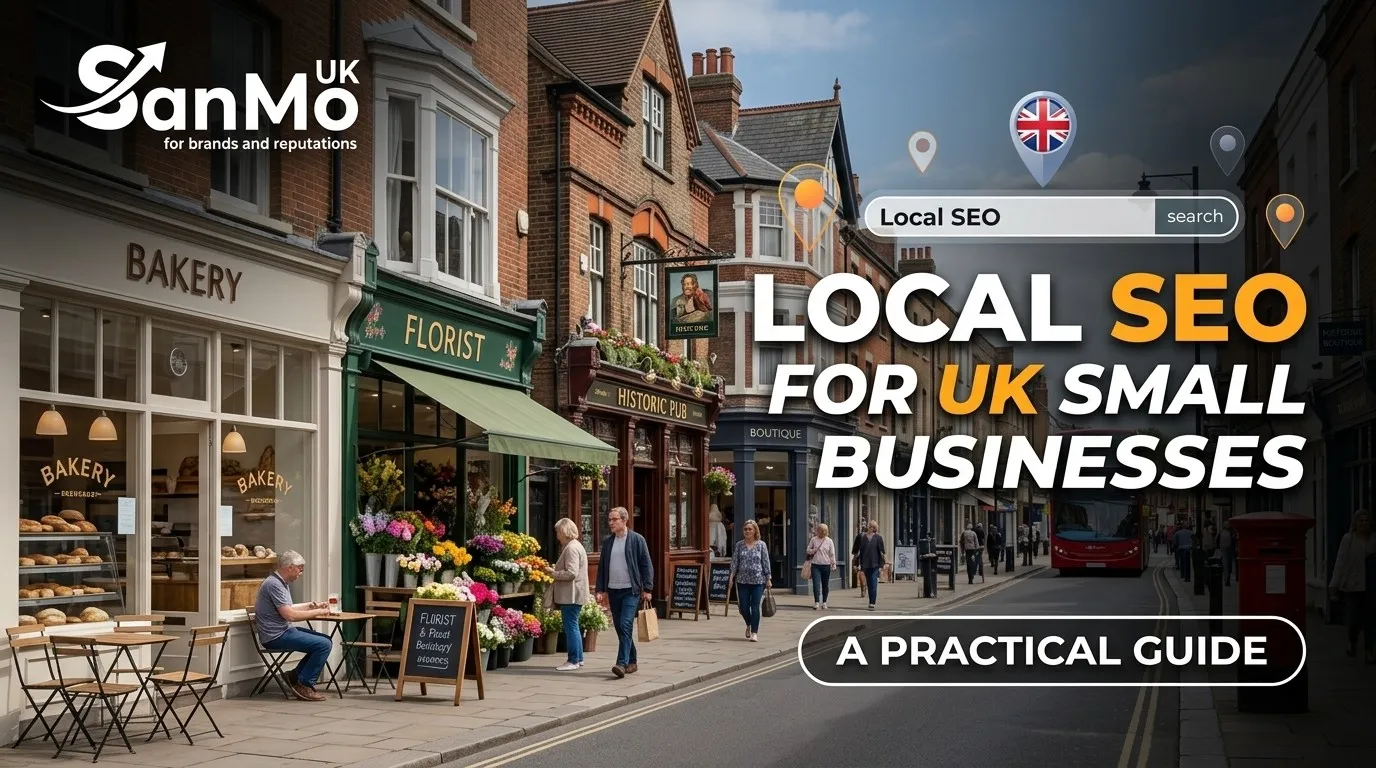
Local SEO for UK Small Businesses helps local customers discover nearby services, compare trusted providers, and take action through Google Search, Google Maps, business listings, and relevant local content.
For a small business in the United Kingdom, being good at what you do is only part of the challenge. Potential customers also need to find you when they search for a product or service in their area. A plumber may deliver excellent work, an independent solicitor may have years of experience, and a local café may serve outstanding food, yet all three can struggle to attract new customers if they remain difficult to discover online.
This is where Local SEO for UK Small Businesses becomes an important part of sustainable growth. Local search optimisation helps businesses appear for geographically relevant searches, including queries such as “accountant in Leeds,” “emergency plumber near me,” and “best independent café in Bristol.”
The objective is not simply to generate more website traffic. It is to attract people who are already looking for something the business offers and make it easier for them to take the next step, whether that means calling, requesting a quote, visiting a shop, or booking an appointment.
This practical guide explains how to establish a strong local search presence, optimise a Google Business Profile, improve website relevance, earn trustworthy reviews, build local authority, and measure the results. It is designed for UK small business owners who want a realistic strategy that can be implemented without an unlimited marketing budget.
What Is Local SEO and Why Does It Matter?
Local SEO is the process of improving a business’s online visibility for searches connected to a particular geographical area. It combines website optimisation, business profile management, accurate directory information, customer reviews, local content, and other signals that help search engines understand where a business operates and which customers it serves.
Unlike broad national SEO, local optimisation often targets customers with immediate or location-specific needs.
For example, someone searching for “how does boiler servicing work” may be researching a future purchase. Someone searching for “boiler service in Manchester” may be ready to compare providers and arrange an appointment.
Local SEO for UK Small Businesses helps connect the second type of searcher with an appropriate local provider.
How Local Search Influences Customer Decisions
Customers rarely evaluate every available business. They tend to create a shortlist based on what they can find quickly, what appears relevant, and which providers seem trustworthy.
A strong local search presence can influence that process in several ways:
- Discoverability: Customers can find the business when searching for relevant products or services.
- Convenience: Accurate contact information, opening hours, directions, and booking details reduce friction.
- Trust: Genuine reviews, clear service descriptions, and a professional website provide reassurance.
- Relevance: Location-specific pages help customers understand whether a business serves their area.
- Conversions: Clear calls to action encourage visitors to make an enquiry or purchase.
The psychological principle is straightforward: people are more likely to consider a business when they can quickly understand what it offers, whether it meets their needs, and why they should trust it.
Which UK Businesses Benefit Most?
Local optimisation can benefit almost any organisation that serves customers within a defined geographical area.
| Business type | Example local search | Potential customer action |
|---|---|---|
| Plumbers and electricians | Electrician in Sheffield | Request a quote |
| Restaurants and cafés | Brunch near Cardiff city centre | Visit or book |
| Accountants | Small business accountant in London | Arrange a consultation |
| Solicitors | Family solicitor in Birmingham | Contact the practice |
| Beauty salons | Hair salon in Glasgow | Book an appointment |
| Cleaning companies | End-of-tenancy cleaning in Nottingham | Request availability |
| Retail shops | Independent gift shop in York | Visit the store |
| Marketing agencies | SEO agency in Manchester | Request a proposal |
| Tradespeople | Local roofer in Reading | Arrange an inspection |
| Fitness studios | Pilates classes in Liverpool | Book a trial session |
Local SEO for UK Small Businesses is especially valuable when customers prefer nearby providers, need services within a limited timeframe, or want to establish a relationship with a business they can contact directly.
However, the strategy must reflect the business model. A shop with a physical storefront, a service-area business operating from customers’ properties, and an online company serving the entire country should not use identical location-targeting methods.
How Google Determines Local Search Visibility
Google does not rank every business using one universal formula. Local results depend on several factors, and the most relevant businesses can differ depending on the search phrase, location, and context.
Google identifies three principal local ranking factors: relevance, distance, and prominence.
Relevance
Relevance describes how closely a business matches what someone is searching for.
A gardening company with a complete profile describing lawn maintenance, hedge trimming, and garden clearance may be more relevant to those searches than a company whose profile contains only a generic description.
Improve relevance by providing accurate business categories, detailed service information, appropriate website content, and a clear explanation of what customers can expect.
Distance
Distance refers to how far a business is from the searcher or the location specified in the search.
A business located in central Edinburgh may be relevant to someone searching there, but it will not necessarily appear prominently for every customer across Scotland.
Distance is not something a legitimate business can eliminate through clever wording. The practical approach is to build visibility in the areas the company genuinely serves rather than pretending to have offices in multiple locations.
Prominence
Prominence concerns how well known and established a business appears to be. Google can consider information from across the web, including links, reviews, and other signals associated with the business.
A company with consistent business information, useful local content, credible references, and authentic customer feedback may develop a stronger presence over time.
These factors explain why Local SEO for UK Small Businesses requires more than adding a town name to a website title. Effective optimisation makes the business easier to understand, geographically relevant, and credible to potential customers.
Organic Results Versus the Local Map Pack
Local searches can display several types of results.
The local map pack typically presents a map and a selection of businesses, often with review ratings, addresses or service areas, opening hours, and contact details.
Organic search results display relevant websites and pages beneath or around other search features. These results can include service pages, location pages, guides, and business websites.
A business can perform well in organic results without appearing in the map pack for every query, and the reverse can also happen. The two areas overlap, but they are not identical.
A sensible strategy therefore improves both the business profile and the website rather than depending entirely on one source of visibility.
Google Business Profile Optimisation

For many local companies, Google Business Profile is one of the most important foundations of local search visibility. It allows eligible businesses to manage how their information appears across Google Search and Maps.
A complete profile helps customers understand the business before visiting its website. Incorrect information, missing services, outdated hours, or confusing contact details can undermine that experience.
Claim and Verify Your Business Profile
Begin by searching Google for the business name and checking whether a profile already exists. If one is available, follow the appropriate process to claim and manage it. If no profile exists, create one in accordance with Google’s eligibility guidelines.
Verification methods depend on Google’s assessment of the business and may include options such as video verification, phone, email, or other available methods.
Use genuine business details throughout the process. A virtual office, an unstaffed location, or a temporary address should not be presented as an eligible customer-facing premises if it does not meet Google’s requirements.
Local SEO for UK Small Businesses becomes more manageable when ownership and access are properly established from the beginning. Business owners should retain control of the primary account and grant agencies or employees only the access they need.
Choose the Most Accurate Business Category
Your primary category should describe the main business activity, not simply a popular keyword.
For example, an accountancy practice should select the most appropriate accountant-related category available rather than choosing a broader category solely because it appears to have greater search demand.
Additional categories can describe genuine secondary services where appropriate. Avoid adding unrelated categories in an attempt to appear for searches the business does not genuinely serve.
Complete Every Relevant Profile Field
Provide accurate information wherever the profile offers a relevant field.
| Profile element | Recommended practice |
|---|---|
| Business name | Use the real-world business name |
| Primary category | Select the closest accurate category |
| Address | Show an eligible customer-facing address where appropriate |
| Service areas | List areas genuinely served |
| Telephone | Use a reliable business contact number |
| Website | Link to the most relevant official page |
| Opening hours | Keep normal and special hours updated |
| Services | Describe actual services and offerings |
| Business description | Explain expertise, customers, and value |
| Booking link | Provide a working booking destination if applicable |
Do not insert additional keywords, neighbourhoods, or promotional claims into the business name unless they are genuinely part of its real-world name.
Write a Useful Business Description
A good description explains what the business does, whom it serves, and what customers can expect.
For example:
“An independent plumbing company serving homeowners and landlords across South Birmingham. Our services include routine plumbing repairs, leak detection, bathroom installations, and maintenance appointments. Contact our team to discuss your requirements and arrange a suitable visit.”
This description is specific, useful, and grounded in actual services. It does not promise guaranteed rankings or use unnatural repetitions of the same search phrase.
Add Authentic Photos and Keep Information Current
Photos can help potential customers recognise a premises, understand a service, or assess the professionalism of a business.
Useful images include the shopfront, workplace, staff, products, completed projects, and genuine examples of the services provided. Obtain appropriate permission before publishing photographs of customers or identifiable individuals.
Update opening hours for bank holidays and other planned closures. Check that telephone numbers, website links, booking links, and service details continue to work.
The aim of Local SEO for UK Small Businesses is to reduce uncertainty for customers. A complete and accurate profile supports that goal while making it easier for interested searchers to take action.
Keyword Research for Local UK Search Intent
Keyword research identifies the phrases customers use when looking for products, services, and information. Effective local keyword research considers both the service being offered and the geographical context.
A common mistake is to focus exclusively on high-volume national keywords. A small accountancy practice may struggle to compete for a broad term such as “accountant,” but it may have a more realistic opportunity to attract relevant searches related to its services and local market.
Identify the Main Keyword Types
Most local keyword opportunities fall into four broad groups.
Service plus location: These searches combine a service with a city, town, or neighbourhood.
Examples include “commercial cleaner in Leeds” and “wedding photographer in Bath.”
Near-me searches: These phrases express geographical intent without naming a specific location, such as “coffee shop near me” or “emergency electrician near me.”
Service-specific searches: These searches reveal a particular need, such as “boiler repair,” “probate solicitor,” or “commercial carpet cleaning.”
Informational local searches: These queries seek guidance connected to a service or local requirement, such as “how much does a house clearance cost in Bristol?”
Local SEO for UK Small Businesses should address these search types according to commercial relevance, competition, and the questions customers need answered before making a decision.
Build a Local Keyword Map
Organise keywords around actual services and the pages that should satisfy each search intent.
| Target page | Primary keyword theme | Supporting topics |
|---|---|---|
| Homepage | Main service and principal location | Expertise, business overview |
| Plumbing service page | Plumbing services in Birmingham | Repairs, installations, maintenance |
| Emergency service page | Emergency plumber in Birmingham | Response availability, urgent repairs |
| Commercial service page | Commercial plumbing services | Landlords, offices, maintenance |
| Local guide | Plumbing costs in Birmingham | Pricing factors, estimates, common issues |
| Contact page | Business name and location | Address, contact details, directions |
The purpose is to give every important page a clear role. If several pages target the same keyword with nearly identical information, they may compete with one another without providing additional value.
Use UK Language and Regional Context Naturally
Search behaviour can vary by service and audience. UK businesses should use familiar terminology and accurate regional references rather than automatically copying American phrasing.
For instance, a British property business may use “estate agent,” while a business targeting a specialist audience might use a more specific term such as “commercial property surveyor.”
Regional terminology should be based on genuine customer language, not assumptions about how every person in a location speaks.
You can use Google Search suggestions, relevant search results, Google Keyword Planner, and suitable SEO research tools to identify possible keywords. Search Console becomes particularly useful once a website has enough data to reveal which queries already generate impressions and clicks.
Assess Intent Before Selecting a Keyword
Search volume alone does not determine the commercial value of a phrase.
Someone searching for “what is a solicitor” may need introductory information. Someone searching for “conveyancing solicitor in Newcastle” may be comparing providers. Someone searching for a named firm may already know which business they want to contact.
Prioritise phrases that match the company’s actual services and the stage of the customer’s decision-making process.
Local SEO for UK Small Businesses works best when keyword research informs useful pages rather than forcing every possible phrase into the homepage.
Website Optimisation for Local Rankings
A Google Business Profile can support discovery, but a well-structured website provides the detail needed to evaluate services, expertise, pricing factors, and suitability.
Website optimisation should make the business easy to understand for both visitors and search engines.
Create Clear Service Pages
Each important service should have a dedicated page when it represents a meaningful customer need and deserves substantial, distinct information.
A professional cleaning company, for example, might create separate pages for domestic cleaning, end-of-tenancy cleaning, office cleaning, and deep cleaning.
Each page should explain:
- What the service includes.
- Who the service is suitable for.
- Which locations are genuinely covered.
- How the process works.
- What influences the price.
- What customers should prepare.
- How to request a quote or arrange a booking.
Avoid publishing several near-identical pages that change only the town name. These pages often provide little additional value and can create a poor user experience.
Optimise Titles, Headings, and Meta Descriptions
Every important page should have a descriptive title that communicates its main subject. Include a location where it naturally clarifies the service.
Example title:
“Emergency Plumbing Services in Birmingham | Business Name”
A useful meta description might explain the services offered, the relevant location, and the next step a customer can take. Meta descriptions do not directly function as a guaranteed ranking boost, but compelling snippets may encourage relevant searchers to visit the page.
Use one clear H1 heading for the main page topic, followed by logical H2 and H3 sections. Headings should organise information for readers rather than repeat the same keyword mechanically.
Display Contact Information Clearly
Customers should not need to search through several pages to find a telephone number or contact form.
For a business with a public premises, provide the correct address and practical visiting information. For a service-area business that travels to customers, explain the locations served without exposing a residential address that should remain hidden.
Keep business name, address, and telephone details consistent across the website and important external listings.
A contact page should include an appropriate contact method, expected response process where known, and any practical information customers need before enquiring.
Improve Mobile Usability and Page Experience
Many local searches happen on mobile devices, particularly when someone needs a nearby service or is ready to visit a business.
Check that:
- Text is readable without unnecessary zooming.
- Buttons are easy to tap.
- Telephone links work on mobile devices.
- Forms are short enough to complete comfortably.
- Pages load reliably on typical connections.
- Important information appears without excessive scrolling.
- Intrusive pop-ups do not prevent visitors from using the page.
Use Google Search Console and PageSpeed Insights to investigate technical and performance issues. A fast page alone cannot guarantee rankings, but a reliable experience can reduce friction and help customers complete their intended actions.
Local SEO for UK Small Businesses should connect visibility with usability. Attracting a potential customer is only the beginning; the website must also help that person make a confident decision.
Add Structured Data Where Appropriate
LocalBusiness structured data can help search engines interpret information about an eligible business, including its name, address, telephone number, opening hours, and other relevant properties.
Use the most suitable schema type and ensure the marked-up information reflects visible, accurate business details. Validate the implementation with Google’s Rich Results Test where applicable and check the website for technical errors.
Structured data does not guarantee enhanced search results or a particular ranking. It is a way of describing information more clearly, not a shortcut around useful content or sound technical SEO.
Creating Location Pages That Deliver Real Value
Location pages help businesses explain how their services meet the needs of customers in specific towns, cities, or neighbourhoods. They are particularly useful for companies that genuinely serve several areas but do not operate a separate customer-facing premises in each location.
However, Local SEO for UK Small Businesses should never become a process of creating hundreds of interchangeable pages. Search engines and customers both benefit from content that provides meaningful local information.
What Should a Local Landing Page Include?
A useful location page should explain the services available in that area, how customers can access them, and what makes the business a suitable option.
Consider including:
- A clear description of the service and location.
- Relevant services and their practical benefits.
- Genuine local projects, case studies, or customer experiences.
- Details about service availability and any geographical limitations.
- Frequently asked questions specific to local customers.
- Relevant photographs or other original supporting material.
- A straightforward enquiry or booking option.
For example, a roofing company serving Leeds and Bradford could create separate pages if the services, customer requirements, project examples, and local information justify them. The pages should not simply repeat the same text with different city names.
A practical Local SEO for UK Small Businesses strategy prioritises a small number of strong pages over a large collection of thin landing pages.
Avoid Misleading Location Claims
Do not create fake office addresses or imply that a company has a physical branch where none exists. Businesses that travel to customers should accurately describe their service areas.
A location page can explain that a company serves customers in a town without claiming to have an office there.
This distinction matters because trust begins before the first enquiry. Accurate information supports customer confidence, protects the business’s reputation, and reduces the risk of misleading local listings.
Reviews, Reputation, and Customer Trust
Reviews are an important part of the customer decision-making process. Before contacting an unfamiliar business, people often look for evidence that other customers have received satisfactory service.
A strong review profile can help a business stand out, but reviews should be treated as genuine feedback rather than a metric to manipulate.
Build a Consistent Review Collection Process
Ask customers for honest feedback after a meaningful service interaction. The request can be sent through email, a follow-up message, or another appropriate communication channel.
Keep the process simple. Customers should not need to complete an unnecessarily complicated sequence of steps to share their experience.
For Local SEO for UK Small Businesses, a consistent approach is generally more sustainable than collecting a large number of reviews in a short period and then ignoring customer feedback for months.
Follow Google’s review policies. Do not buy reviews, offer rewards in exchange for positive ratings, selectively solicit only favourable reviews, or pressure customers to change their feedback.
Respond to Positive and Negative Reviews
A thoughtful response demonstrates that the business takes customer experiences seriously.
For positive reviews, thank the customer naturally and mention a relevant detail when appropriate. Avoid publishing repetitive, keyword-stuffed replies that sound automated.
For negative feedback, acknowledge the concern, remain professional, and offer an appropriate way to investigate the issue privately. Do not reveal confidential customer information or become defensive in a public exchange.
Some complaints will be justified, while others may reflect misunderstandings or circumstances outside the business’s control. The objective is to respond fairly, not to win an argument.
Connect Reputation Management With Local SEO
A local business’s reputation extends beyond its Google reviews. Customers may encounter its website, news mentions, social profiles, industry directories, and third-party discussions before deciding whether to make contact.
Businesses that want to develop stronger trust signals can explore Brand Authority as part of a broader strategy for establishing credibility, expertise, and recognition.
Local SEO for UK Small Businesses becomes more resilient when its visibility strategy is supported by a consistent and credible brand presence.
For businesses managing reviews and brand mentions across multiple channels, Proactive Brand Monitoring can help identify emerging issues and customer conversations before they become larger reputation problems.
The key principle is simple: make it easy for satisfied customers to share honest experiences, respond constructively to criticism, and use recurring feedback to improve the actual service.
Local Citations and Link Building
Local citations are online references to a business’s identity and contact information. They can appear in directories, professional associations, industry websites, local publications, and other relevant sources.
Links from credible websites can also help people discover a business and provide useful context about its expertise or local involvement.
Maintain Accurate Business Listings
Start with the directories and platforms most relevant to the business rather than attempting to register everywhere.
Potential sources include:
- Established UK business directories.
- Relevant professional or trade associations.
- Local chambers of commerce.
- Industry-specific directories.
- Local business partnerships and community organisations.
- Credible regional publications.
Ensure the business name, address where appropriate, telephone number, website, and other key details are accurate.
Minor formatting differences are not necessarily disastrous, but outdated telephone numbers, duplicate listings, and conflicting addresses can confuse customers.
Local SEO for UK Small Businesses benefits from accurate listings because customers should encounter the same reliable business information wherever they discover the company.
Earn Relevant Local Backlinks
A backlink is a link from another website to your own. Rather than concentrating exclusively on the number of backlinks, focus on their relevance, credibility, and potential to reach a suitable audience.
A local accountant might contribute practical tax guidance to a regional business publication. A trades company could participate in a genuine community initiative covered by local media. A specialist retailer might collaborate with complementary businesses on a useful local resource.
These approaches create a genuine reason for another website to reference the business.
Avoid paid link schemes that violate search engine policies, mass-produced guest posts created only to manipulate rankings, and irrelevant directories with little editorial oversight.
For Local SEO for UK Small Businesses, a handful of meaningful local references can provide more strategic value than a large volume of low-quality links.
Publishing Useful Local Content

Local content helps businesses answer customer questions before a purchase and demonstrate knowledge of the communities they serve.
A useful content strategy begins with real customer needs. Instead of publishing generic articles simply because a keyword has search volume, identify the questions customers repeatedly ask during consultations, enquiries, and sales conversations.
Local Content Ideas for UK Businesses
| Content type | Example topic | Primary purpose |
|---|---|---|
| Cost guide | How much does roof repair cost in Leeds? | Explain pricing factors |
| Practical guide | Preparing a rental property for end-of-tenancy cleaning | Educate potential customers |
| Comparison article | Independent accountant versus online accounting service | Help customers evaluate options |
| Local case study | How a local retailer improved its booking process | Demonstrate experience |
| Seasonal guide | Preparing gardens for the British winter | Address seasonal needs |
| Service FAQ | When should a landlord arrange an electrical inspection? | Answer practical questions |
| Community resource | A guide to planning a small business launch in Bristol | Build local relevance |
Every article should serve a defined purpose and provide information that is accurate, useful, and appropriate for the audience.
Local SEO for UK Small Businesses can benefit from content that connects general expertise with genuine local circumstances. However, inserting a place name into an otherwise generic article does not automatically make the content locally valuable.
Demonstrate Experience and Credibility
Where appropriate, explain who created the content, what experience informs it, and where readers can find additional reliable information.
For regulated or high-stakes services, including legal, financial, and medical services, ensure content is reviewed by suitably qualified professionals and avoids misleading claims.
Businesses should also provide transparent information about their services, limitations, fees where available, and the people responsible for delivering the work.
A trustworthy website does not need to claim that it is the best in every town. It needs to demonstrate why its services may be suitable for the customer’s particular requirements.
Technical SEO for Local Websites
Technical SEO helps search engines access, understand, and index a website. Even excellent local content can underperform if important pages cannot be crawled, contain conflicting canonical signals, or suffer from avoidable technical problems.
Build a Logical Website Structure
Organise the website so that users can move naturally from the homepage to service pages, relevant location pages, supporting articles, and contact information.
Use descriptive internal links that explain what visitors can expect after clicking.
For example, a guide about commercial cleaning could link to the relevant commercial cleaning service page. This helps readers move from research to a practical next step.
Local SEO for UK Small Businesses should use internal links to support navigation and clarify relationships between important pages, not to repeat exact-match anchor text excessively.
Check Indexing and Performance
Use Google Search Console to monitor indexing issues, search performance, and technical warnings.
Review:
- Whether important pages are indexed.
- Whether robots directives unintentionally block useful content.
- Whether canonical tags point to the correct preferred URLs.
- Whether redirects work correctly.
- Whether XML sitemaps contain appropriate canonical pages.
- Whether mobile pages are usable.
- Whether broken links or server errors affect important URLs.
- Whether Core Web Vitals reveal performance problems.
Resolve the issues most likely to affect access, usability, and business outcomes first. A minor technical warning does not always deserve more attention than a broken enquiry form.
Measuring Local SEO Performance
Rankings alone cannot show whether a local search strategy is producing meaningful business results. A company might receive more impressions but few qualified enquiries, or generate fewer website visits while attracting customers who spend more.
Local SEO for UK Small Businesses should be measured against business objectives, not vanity metrics alone.
The Most Useful Metrics to Track
| Metric | Where to investigate | What it helps explain |
|---|---|---|
| Local organic clicks | Google Search Console | Visits from organic search |
| Search impressions | Google Search Console | Visibility for relevant queries |
| Search click-through rate | Google Search Console | How often impressions lead to clicks |
| Business profile interactions | Google Business Profile performance | Customer engagement with the profile |
| Phone enquiries | Call tracking or business records | Calls generated by marketing |
| Form submissions | Website analytics or CRM | Online enquiries |
| Qualified leads | CRM or sales records | Enquiry quality |
| Bookings and sales | Booking platform or CRM | Commercial outcomes |
| Lead conversion rate | Analytics and CRM data | How effectively leads become customers |
| Revenue from organic leads | Sales and attribution records | Commercial contribution |
Business Profile performance features and available metrics can change, so use the reporting currently provided in the account.
Set Up a Practical Reporting Routine
Establish a baseline before making substantial changes. Record current search performance, business profile interactions, enquiries, and completed sales where those figures are available.
Review the data monthly and look for meaningful patterns. If organic traffic increases but enquiries remain flat, investigate the relevance of landing pages, the clarity of calls to action, and the quality of incoming search traffic.
If enquiries increase but sales do not, the problem may involve pricing, lead qualification, response times, or the sales process rather than SEO alone.
For Local SEO for UK Small Businesses, a simple reporting process is often more useful than an elaborate dashboard nobody checks.
A Practical 90-Day Local SEO Action Plan
Small businesses do not need to implement every possible optimisation at once. A phased approach makes the work manageable and helps owners understand which activities produce useful improvements.
Days 1–30: Establish the Foundation
Start by checking business information, profile ownership, service categories, contact details, opening hours, and website links.
Complete relevant profile fields, identify the main services, and check whether the most important website pages are accessible and indexed.
Conduct initial keyword research and record a baseline of search visibility and enquiries.
Priority: Make the business information accurate, accessible, and easy for customers to understand.
Days 31–60: Improve Relevance and Trust
Optimise the most important service pages and address significant mobile usability issues.
Create or improve genuinely useful location pages where needed. Develop a simple process for requesting honest customer reviews, responding to feedback, and maintaining directory accuracy.
Identify relevant local organisations, publications, and potential partnerships that may offer legitimate opportunities for exposure.
Priority: Help the right customers find the right information and feel confident contacting the business.
Days 61–90: Expand and Measure
Publish supporting content based on genuine customer questions. Improve internal linking and review the website’s technical health.
Examine Search Console data and business profile performance to identify pages and queries that deserve additional attention.
Compare enquiry quality and commercial outcomes against the initial baseline. Continue effective activities, revise weak pages, and prioritise the next set of improvements.
Priority: Turn early observations into a repeatable optimisation process.
What Should a Small Business Budget For?
The required budget depends on the business’s competition, geographical reach, website condition, available staff time, and the complexity of its services.
Some owners can manage the basics themselves using free Google tools and a modest investment of time. Others may need professional help with technical SEO, content production, analytics, or a highly competitive local market.
There is no universal price or guaranteed timeframe for results. Avoid providers promising immediate first-place rankings, guaranteed map-pack positions, or hundreds of artificial reviews.
Common Local SEO Mistakes to Avoid
Even a well-intentioned campaign can waste time if it focuses on shortcuts rather than customer needs.
Keyword stuffing: Repeating the same phrase unnaturally can damage readability. Use the main topic where it fits and vary the surrounding language naturally.
Fake locations: Creating misleading addresses or claiming to operate from locations the business does not genuinely serve can breach platform guidelines.
Duplicate location pages: Pages with almost identical text and little distinctive value rarely provide a strong customer experience.
Neglected reviews: Leaving genuine complaints unanswered or responding aggressively can undermine confidence.
Outdated business information: Incorrect opening hours, telephone numbers, or service descriptions can cost the business enquiries.
Low-quality backlinks: Buying manipulative links or pursuing irrelevant placements can create risk without providing meaningful value.
Ignoring conversions: Traffic growth is not enough if customers cannot understand the service or complete an enquiry.
Expecting instant results: Search visibility develops over time, and outcomes vary with competition, relevance, distance, website quality, and other factors.
Businesses should also remember that Local SEO for UK Small Businesses is not a one-time setup. Services change, competitors improve, customers leave feedback, and website information becomes outdated. Regular maintenance is part of the strategy.
The Role of Brand Trust in Long-Term Local Visibility
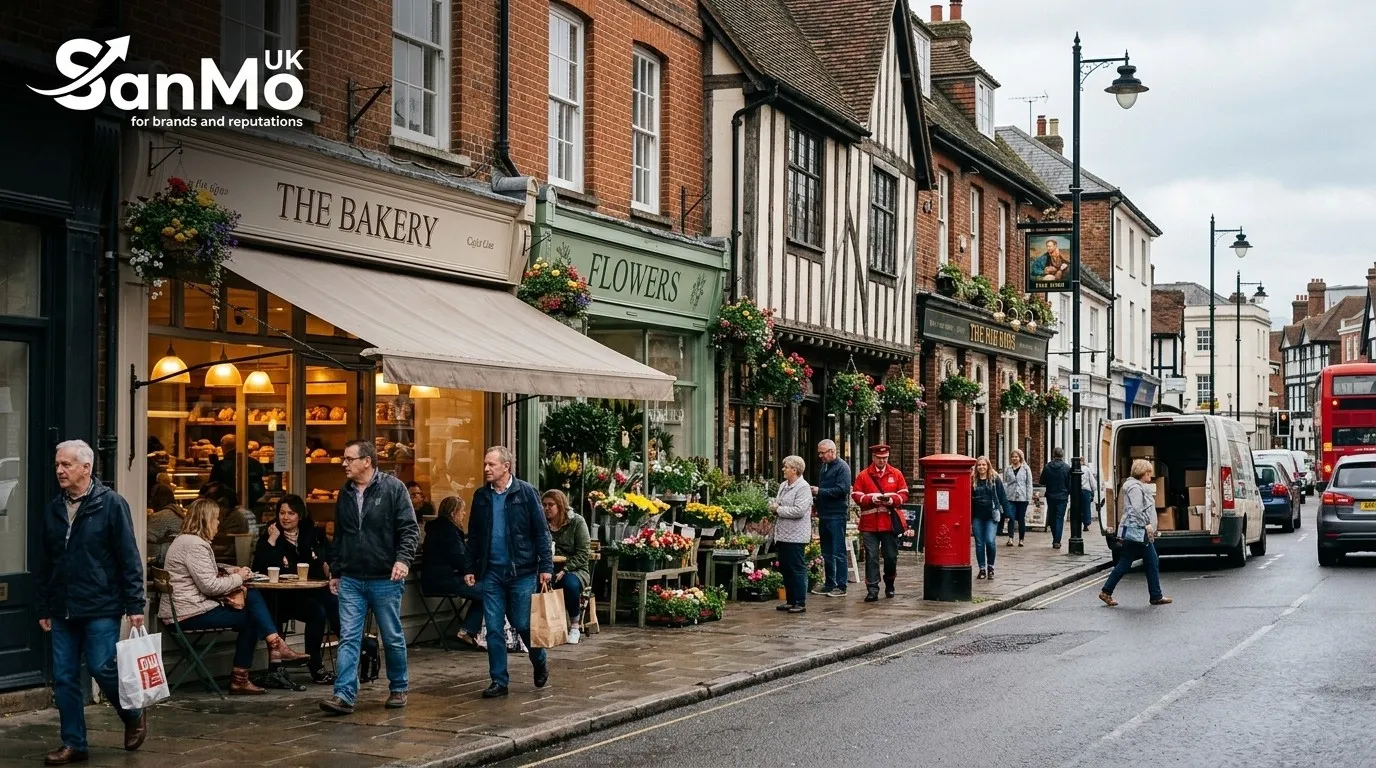
Local search success depends partly on whether customers and search engines can establish a consistent understanding of the business.
That means keeping information accurate, demonstrating genuine expertise, maintaining a helpful website, and responding appropriately when people discuss the company online.
Reputation management can be particularly important when a business receives inaccurate claims, recurring complaints, or confusing references across different platforms. A structured approach to SEO Reputation Management can help businesses strengthen the relationship between search visibility, credible information, and customer trust.
Similarly, companies with multiple locations or a substantial online presence may benefit from suitable AI Brand Monitoring Tools to help identify relevant brand mentions and monitor changes in online conversations. Tool selection should reflect actual monitoring needs, available resources, and the importance of human review.
For Local SEO for UK Small Businesses, the underlying principle remains the same: visibility is most valuable when it connects people with accurate information and a business that can genuinely meet their needs.
Conclusion
Local SEO for UK Small Businesses is a practical, long-term approach to helping nearby customers discover and trust a company. Start with an accurate Google Business Profile, relevant service pages, consistent business information, and a straightforward mobile experience. Build on that foundation with genuine customer reviews, useful local content, credible links, and regular performance monitoring. Avoid fake locations, repetitive pages, manipulative reviews, and promises of guaranteed rankings. Most importantly, measure success through qualified enquiries, bookings, and revenue rather than visibility alone. Consistent improvements, supported by honest business information and a customer-focused website, can create a stronger local search presence and a more dependable source of new business opportunities.
Frequently Asked Questions (FAQ)
What Is Local SEO for UK Small Businesses?
Local SEO for UK Small Businesses is the process of improving a company’s visibility in location-related searches through business profile optimisation, website improvements, local content, customer reviews, and relevant online listings.
Is Google Business Profile Free for UK Businesses?
Yes. Google Business Profile is generally free to create and manage for eligible businesses. Companies should follow Google’s eligibility and verification requirements and keep their information accurate.
How Long Does Local SEO Take to Show Results?
The timeframe varies according to competition, website condition, location, and the work required. Some improvements can help customers immediately, while meaningful changes in organic visibility may take several months or longer.
Can a Business Rank in Multiple UK Cities Without Offices?
A service-area business can serve multiple locations without establishing a separate office in each one. Visibility varies by search and location, and businesses should not create fake addresses or misleading profiles.
Do Customer Reviews Improve Local SEO?
Reviews can contribute to local prominence and help customers evaluate a business. Genuine feedback, professional responses, and a consistent review process support trust, but no particular number of reviews guarantees a ranking.
Is a Website Necessary for Local SEO?
A website is not always required to maintain a Google Business Profile, but it provides greater control over service information, useful content, enquiries, and conversion tracking. A well-maintained website can strengthen a broader local strategy.
Which Keywords Should UK Small Businesses Target?
Prioritise relevant service terms, location-specific searches, customer questions, and phrases that reflect commercial intent. Choose keywords according to actual services, customer needs, and the locations genuinely served.
Does Social Media Help Local SEO?
Social media can support brand awareness, customer communication, referrals, and website discovery. However, social activity should not be treated as a guaranteed direct ranking factor. Its value often comes from the wider business benefits it creates.
What Is the Difference Between Local SEO and Traditional SEO?
Local SEO focuses on geographically relevant discovery, including Google Maps and location-specific searches. Traditional SEO can target broader informational, national, or international audiences. Many businesses benefit from combining both approaches.
How Can I Measure Whether Local SEO Is Working?
Track relevant organic clicks, search impressions, business profile interactions, qualified enquiries, bookings, and revenue. Compare results against a baseline and assess whether visibility is attracting customers who are likely to become paying clients.