Google Maps SEO for UK Businesses helps local companies improve visibility, attract nearby customers, build trust, and generate more calls, website visits, enquiries, and sales.
When someone searches for a plumber in Manchester, a solicitor in Birmingham, a restaurant in London, or a hairdresser near home, they usually want a reliable solution without wasting time. They want to compare nearby options, check reviews, find opening hours, and contact a business that meets their needs.
Google Maps helps customers make these decisions by connecting local searches with relevant businesses. For companies that depend on customers within a specific geographic area, visibility in local search results can create valuable opportunities to generate enquiries, appointments, visits, and sales.
However, creating a Google Business Profile does not automatically guarantee prominent rankings. Businesses need accurate information, appropriate categories, relevant services, genuine reviews, a credible website, and a consistent customer experience.
Google Maps SEO for UK Businesses is the process of improving a company’s visibility in Google Maps and related local search results through profile optimisation, local relevance, reputation building, and website improvements. The goal is not simply to appear on a map but to attract relevant customers who are more likely to take meaningful action.
For UK businesses competing in crowded markets, successful optimisation requires an understanding of customer behaviour, local competition, and Google’s approach to local search. This guide explains the strategies that matter, the mistakes to avoid, and how to build a sustainable local search presence without relying on shortcuts or unrealistic ranking promises.
Understanding How Google Maps SEO Works
Google Maps SEO is more than adding a business address to a map. It involves improving the information and credibility Google uses to connect businesses with relevant searches.
Google identifies three primary factors for local rankings: relevance, distance, and prominence. Their relative importance can vary, and Google does not publish a formula that guarantees a particular position.
Relevance: Match What Customers Are Searching For
Relevance describes how closely a business matches a person’s search. Google needs to understand what a company does, which services it offers, and whether those services meet the searcher’s requirements.
For example, a customer searching for an emergency locksmith is looking for a different service from someone researching residential security systems. A locksmith whose profile accurately describes its actual services gives Google and potential customers more useful information.
Businesses can strengthen relevance by selecting the correct primary category, adding appropriate secondary categories, listing genuine services, and maintaining consistent information across their website and profile.
Distance: Understand the Geographic Limitation
Distance concerns how far a business is from the searcher or the location specified in the search.
A bakery in central Bristol may appear for a person searching nearby but may be less visible to someone searching from a distant neighbourhood. This variation is normal.
Google Maps SEO for UK Businesses cannot eliminate geographical limitations. Instead, businesses should focus on improving visibility within realistic service areas and targeting customers they can genuinely serve.
Prominence: Establish a Credible Reputation
Prominence reflects how well-known a business is. Google may use information from across the web, including reviews, links, and other references, to understand a business’s prominence.
A business with a well-maintained profile, genuine customer feedback, a useful website, and relevant local mentions may have a stronger overall presence than a competitor with incomplete information.
These three factors work together. A company should not focus exclusively on reviews, keywords, or backlinks while neglecting the rest of its local search presence.
Google Maps SEO Versus Traditional SEO
Traditional SEO primarily focuses on improving website visibility in organic search results. Google Maps SEO focuses on local business listings and geographically relevant searches.
| Area | Traditional SEO | Google Maps SEO |
|---|---|---|
| Primary objective | Improve organic website visibility | Improve local map visibility |
| Main assets | Website pages and content | Google Business Profile and website |
| Geographic influence | Local, national, or international | Strongly influenced by search location |
| Trust signals | Relevant content, links, reputation | Reviews, business information, prominence |
| Common actions | Website visits, form submissions | Calls, directions, bookings, visits |
| Measurement | Organic traffic and conversions | Profile interactions and local leads |
The strongest strategy combines both approaches. A useful website supports detailed customer research, while an accurate Business Profile helps nearby customers discover and contact the business.
Set Up and Verify Your Google Business Profile

A legitimate and complete Google Business Profile provides the foundation for Google Maps SEO for UK Businesses.
Before creating a new listing, search for the business on Google Maps and Google Search. An existing listing may already represent the company, in which case claiming and verifying the correct profile is preferable to creating a duplicate.
Claim and Verify the Correct Listing
Follow Google’s official process to claim or create an eligible profile and complete the verification method offered for the business.
Verification establishes that an authorised person can manage the listing. It does not automatically guarantee high rankings, but it is an important step towards maintaining accurate business information.
Before making changes, check that the listing represents the correct business, the telephone number is active, the website belongs to the company, and the address or service area is accurate.
Use Your Real Business Name
Avoid adding extra keywords to a business name solely to influence rankings.
For example, if a company’s real name is Northside Plumbing, changing the listing to “Northside Plumbing Best Emergency Plumber London” simply to target additional searches can violate Google’s guidelines.
Use the name the business genuinely uses in the real world. Optimise the appropriate profile fields, services, categories, and website content instead of manipulating the business name.
Choose the Most Appropriate Primary Category
Your primary category helps Google understand the main purpose of the business.
| Business type | Example primary category |
|---|---|
| Dental practice | Dentist |
| Plumbing company | Plumber |
| Hair salon | Hair salon |
| Italian restaurant | Italian restaurant |
| Estate agency | Real estate agent |
| Digital marketing agency | Internet marketing service |
These examples are illustrative. Select the closest accurate category available in the current profile interface.
Add secondary categories only when they genuinely describe other important services. Choosing numerous unrelated categories can make the listing less accurate rather than more effective.
Complete Every Relevant Profile Field
An incomplete profile can leave customers uncertain about the business, its services, and how to make contact.
Where applicable, provide:
- An accurate business description.
- Correct opening hours and holiday hours.
- A working telephone number.
- The official website.
- Appropriate services and products.
- An accurate address or service area.
- Relevant photographs.
- Booking or appointment information where available.
- Applicable business attributes.
Google Maps SEO for UK Businesses becomes more effective when essential information is complete and maintained regularly.
Optimise Business Information for Local Relevance
After verification, make it easy for Google and potential customers to understand what the business does and where it operates.
Write a Clear Business Description
A useful business description answers three basic questions: what does the company offer, whom does it serve, and what can customers expect?
Consider a fictional heating company serving residential customers in Leeds.
A weak description might say:
“We provide excellent services to customers. Contact us today to learn more.”
A stronger description would explain that the company provides domestic boiler servicing, heating maintenance, and fault diagnosis for homeowners in its genuine service area.
The second version gives customers practical information and communicates the business’s purpose clearly.
Avoid repetitive keywords, unsupported claims, excessive promotional language, and prohibited links. The description should explain the business rather than read like a list of search terms.
Add Accurate Services and Products
Where relevant features are available, list the services and products the business genuinely provides.
An electrician might list electrical inspections, lighting installation, fault diagnosis, and consumer unit upgrades. A salon could list hair colouring, styling, and specific treatments available to customers.
This helps people understand the offering before making contact. It also prevents the mismatch that occurs when customers expect services the company cannot deliver.
Keep Your Website and Profile Consistent
Your website and Business Profile should communicate the same basic business information.
Check the business name, address where applicable, telephone number, opening hours, and core services. Correct outdated details promptly.
A company should also ensure that its website provides enough detail to answer customer questions. A roofing business, for example, may benefit from separate pages explaining roof repairs, inspections, and flat roofing services.
For a broader approach to profile improvements, the Google Business Profile SEO guide provides additional information about profile optimisation and local visibility.
Research Local Keywords and Customer Intent
Keyword research helps businesses understand how customers describe their needs. The most valuable search terms are not necessarily the ones with the highest search volume; they are the terms that connect relevant customers with services the company can actually deliver.
Understand Different Types of Local Searches
A person searching for “plumber” may be exploring options. Someone searching for “emergency plumber in Bristol” is communicating a more specific need.
| Search type | Example | Likely intent |
|---|---|---|
| General service | Dentist | Discover available providers |
| Service and location | Dentist in Sheffield | Find a nearby practice |
| Specific service | Invisalign consultation Sheffield | Explore a particular treatment |
| Urgent need | Emergency locksmith near me | Find immediate assistance |
| Brand search | Business name and town | Locate a known business |
Google Maps SEO for UK Businesses should prioritise relevant search intent instead of attempting to appear for every possible variation.
Find Keywords That Match Your Services
Begin with the services that contribute most to revenue. Research how customers describe those services and the locations in which they need them.
Useful methods include reviewing Google Search Console queries, examining customer enquiries, exploring relevant local search results, and using keyword research tools to identify related phrases.
A removals company might discover demand for house removals, office relocations, student removals, and packing services in its operating area. Each search represents a distinct need that may deserve an appropriate website page or service description.
Avoid Keyword Stuffing
Repeating a phrase such as “best plumber London” throughout a profile does not make the business more trustworthy or useful.
Use natural language, accurate categories, relevant services, and informative website content. Keywords should help describe the business rather than distort its identity.
Improve Your Website to Support Google Maps Visibility
A Business Profile is central to Maps optimisation, but the linked website can support the broader local search strategy. Useful pages help customers understand the company’s expertise and provide additional context about its services.
Create Dedicated Service Pages
Suppose a Manchester home improvement company offers kitchen installations, bathroom renovations, and loft conversions.
A single generic services page may not provide enough detail about each offering. Separate service pages can explain the process, materials, typical project considerations, and how customers can request a quotation.
Each page should answer genuine questions and provide practical value. Avoid publishing thin pages created solely to target variations of the same keyword.
Build Useful Location Pages
Location pages can help explain where a business operates and what customers in each area can expect.
A strong page may include locally relevant projects, genuine testimonials, services available in that area, practical availability information, and clear contact options.
Do not create pages that falsely imply a physical office exists in a town where the business has no eligible premises. A service-area company can explain where it genuinely operates without inventing local offices.
Businesses looking to improve their broader website visibility can also explore Small Business SEO for practical guidance on content, search performance, and sustainable optimisation.
Improve Mobile Usability and Technical Performance
Local customers often search on smartphones when they are ready to call, book, or visit a business.
Make sure the website loads reliably, displays properly on mobile devices, uses HTTPS, and provides obvious contact options. Test telephone links, enquiry forms, booking processes, and important landing pages.
Technical improvements do not guarantee a higher Maps position, but they can improve the customer experience and support broader organic search performance.
Use Appropriate Structured Data
Relevant LocalBusiness structured data can help search engines interpret business information on a website.
Where applicable, provide accurate details such as the business name, address, telephone number, opening hours, and website. Use an appropriate business subtype and ensure that the marked-up information reflects genuine, visible details.
Structured data does not guarantee a special search appearance or a particular ranking. It should support accurate communication rather than be treated as a ranking shortcut.
Earn Genuine Reviews and Build Customer Trust
Customer reviews help people assess whether a business is reliable, professional, and capable of delivering the expected service. Review count and positive ratings can also contribute to Google’s understanding of local prominence.
Google Maps SEO for UK Businesses should therefore include a consistent and ethical process for requesting and responding to customer feedback.
Create a Simple Review Request Process
After completing a successful transaction or service, thank the customer and invite them to leave an honest review.
Businesses can use the review link or QR code available through their Business Profile tools and share it through appropriate customer communications.
For example, a plumbing company might send a short message after completing a repair, thanking the customer and providing the review link.
The request should be polite, straightforward, and free from pressure.
Do not purchase reviews, create fake customer accounts, or offer incentives in exchange for Google reviews. Avoid selectively soliciting only positive feedback. Follow Google’s current review policies.
Respond to Positive Reviews Naturally
A thoughtful response acknowledges the customer’s experience and reinforces the company’s commitment to good service.
For example:
“Thank you for sharing your experience. We’re glad the installation went smoothly and appreciate you taking the time to leave feedback.”
Responses do not need to be lengthy. Personalise them where appropriate and avoid publishing identical generic replies beneath every review.
Handle Negative Reviews Professionally
Negative feedback can be uncomfortable, but a professional response can help future customers understand how the business handles problems.
A sensible approach is to acknowledge the concern, apologise where appropriate, avoid revealing private information, and offer a suitable way to investigate the issue.
If a review violates Google’s policies, use the official reporting process rather than retaliating against the reviewer.
Reputation management should extend beyond a single platform. Monitoring feedback, responding consistently, and correcting genuine service problems help businesses maintain credibility. This is where SEO Reputation Management can complement local search optimisation.
Why Review Quality Matters Beyond Star Ratings
Customers may consider the number of reviews, their recency, the details they contain, and how the business responds to concerns.
A detailed review explaining that an electrician arrived on time, communicated the cost clearly, and completed the work professionally gives potential customers more useful information than a vague comment.
Businesses cannot control what customers write, but they can provide reliable service and invite genuine feedback consistently.
Build Accurate Local Citations
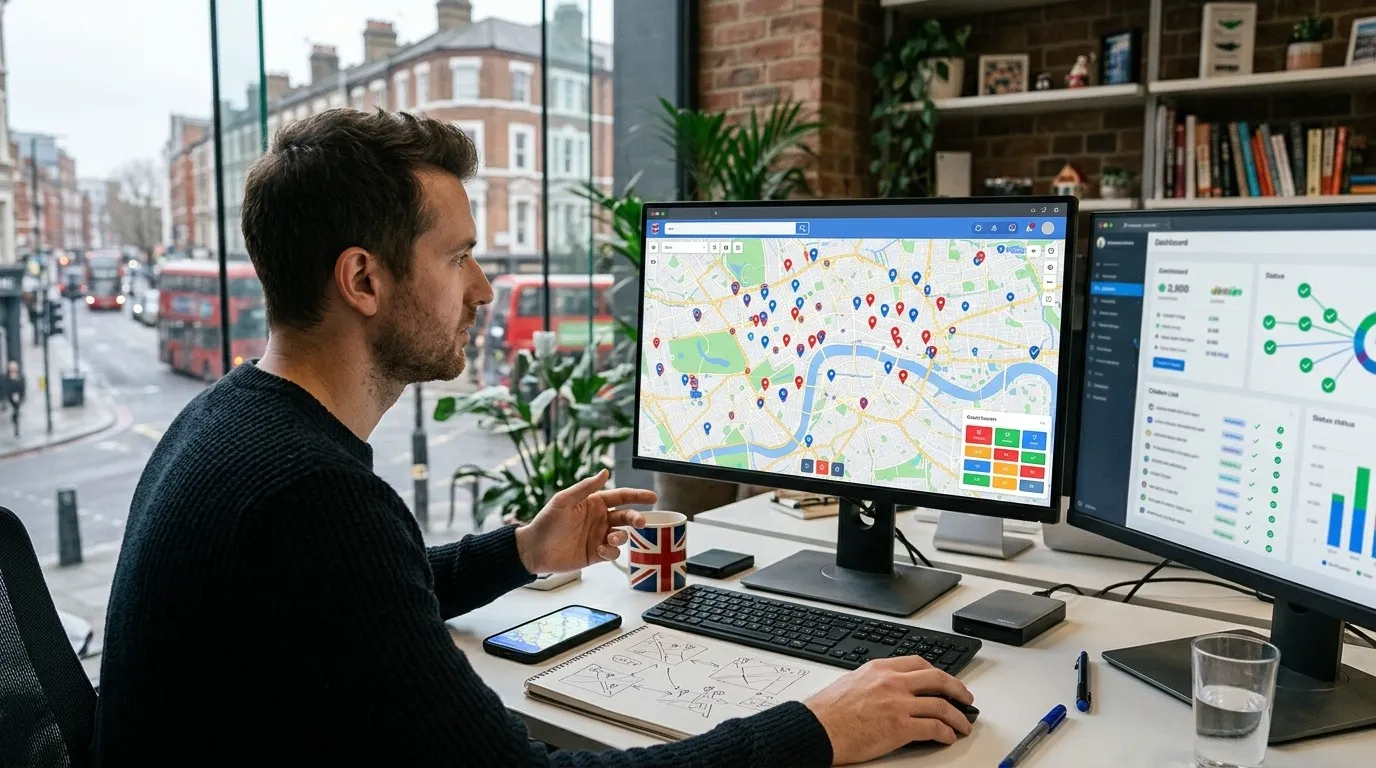
Local citations are online mentions of a business’s details, particularly its name, address, and telephone number. They may appear in business directories, professional association listings, local publications, and relevant industry platforms.
Citations can help customers discover a business and provide additional information about its identity. However, creating hundreds of low-quality listings is not automatically better than maintaining a smaller number of accurate, relevant references.
Identify Useful UK Citation Sources
Potential sources include established UK directories, legitimate trade associations, chambers of commerce, professional membership directories, and relevant industry-specific websites.
The right sources depend on the business. A solicitor, restaurant, and commercial cleaning company will not necessarily benefit from the same directories.
Before submitting information, evaluate the website’s credibility, relevance, listing requirements, and actual value to customers.
Maintain Consistent Business Information
NAP stands for Name, Address, and Phone number.
If a business changes its telephone number or moves premises, update the Business Profile, website, and important directory listings.
Formatting differences do not necessarily mean the information is inconsistent. The important point is that the business’s identity and contact details remain accurate and recognisable.
| Common issue | Recommended action |
|---|---|
| Outdated telephone number | Update the listing |
| Previous address | Correct or remove obsolete details |
| Duplicate directory entry | Request correction or consolidation |
| Incorrect business name | Use the genuine real-world name |
| Irrelevant directory | Evaluate whether the listing provides value |
| Missing important citation | Add accurate details if the source is suitable |
Focus on Quality, Not Quantity
Google Maps SEO for UK Businesses benefits from a credible and consistent online presence. Relevant citations can support that presence, but there is no universal citation count that guarantees better rankings.
Prioritise accurate business details, reputable sources, and genuine local relevance. Avoid automated submissions to irrelevant directories merely to increase backlink or citation totals.
For additional context, The Citation Secret explores the relationship between citations, trust signals, and local search visibility.
Build Local Authority Through Relevant Links and Mentions
Local prominence can be supported by a business’s broader digital presence, including relevant website links, local relationships, industry references, and editorial coverage.
The distinction is between earning meaningful recognition and manufacturing artificial signals.
Earn Links From Relevant Organisations
Consider a Birmingham accountancy firm that sponsors a legitimate local business event. If the organiser publishes a page acknowledging sponsors and links to the firm, the reference can help people discover the business and provide useful context about its local involvement.
Other opportunities include contributing expert commentary to local publications, participating in community initiatives, publishing useful industry research, and collaborating with complementary businesses.
These activities should create value independently of SEO. Genuine relationships are more sustainable than links acquired solely to manipulate rankings.
Publish Content Worth Referencing
Useful content gives customers and other organisations a reason to mention or reference a business.
A roofing company might explain common roofing materials. A solicitor could publish an accessible guide to a legal process. A local marketing agency might share a practical website audit checklist.
The content should demonstrate genuine knowledge and answer questions relevant to the intended audience.
Avoid Manipulative Link Building
Be cautious of providers promising guaranteed top-three Maps rankings through large volumes of paid links, automated submissions, or private link networks.
A large quantity of irrelevant links is not a substitute for accurate business information, useful content, and genuine customer trust.
Google Maps SEO for UK Businesses should support a credible online presence rather than depend on artificial link-building tactics.
Publish Useful Google Business Profile Updates
Business Profile posts can communicate timely information to people who discover a company through Google.
Depending on the available features, businesses may share announcements, events, service updates, offers, and other relevant information.
Posts should not be treated as a guaranteed ranking boost. Their practical value lies in helping customers understand what is happening and encouraging relevant actions.
What Should UK Businesses Publish?
Useful examples include a restaurant announcing a seasonal menu, a salon introducing a genuine new treatment, a retailer highlighting a product range, or a business communicating confirmed changes to its operating hours.
Each update should have a clear purpose and accurate information. If it includes a call to action, ensure that the destination works and reflects the offer described.
Maintain a Realistic Publishing Schedule
Daily posting is not necessary if the business has nothing meaningful to communicate.
Publish when there is a genuine update, seasonal announcement, relevant event, or useful piece of information. Keep essential profile details accurate regardless of posting frequency.
Google Maps SEO for UK Businesses should prioritise customer usefulness rather than superficial activity.
Use High-Quality Photographs to Reduce Customer Uncertainty
Photographs help customers understand what a business looks like, what it offers, and whether it matches their expectations.
A restaurant can show its dining area and food. A tradesperson can display completed projects with appropriate permission. A retailer can provide clear photographs of its products and storefront.
Google recommends adding photos and videos to Business Profiles to help customers learn more about a business.
Which Photographs Should You Upload?
Prioritise authentic, useful images such as:
- The exterior and entrance.
- The interior or customer-facing area.
- Products or completed projects.
- Staff performing their actual roles.
- Relevant equipment.
- Examples of work completed with appropriate permission.
For businesses with physical premises, exterior photographs can help customers identify the correct building.
Keep Images Authentic and Current
Avoid presenting stock images as if they show the actual premises, staff, or completed projects.
Respect privacy and obtain permission before publishing identifiable customer photographs. Update images when important changes occur, such as a refurbishment or a new entrance.
Do Photographs Improve Rankings?
Adding a particular number of images does not guarantee higher Maps rankings. Authentic photographs can improve the information available to customers and help them decide whether to visit or make contact.
The priority should be representing the real business clearly rather than uploading images solely to meet an arbitrary target.
Optimise Service-Area Businesses Across the UK
Many UK businesses travel to customers rather than operating from a public shopfront. Plumbers, electricians, cleaners, mobile mechanics, and home service providers often fall into this category.
These businesses need an accurate approach to location management.
Set a Genuine Service Area
A service-area business should represent its real operating location and define the areas it genuinely serves using the available Business Profile settings.
A plumber operating from a residential address may be eligible for a profile but should generally hide the address if customers are not served there.
Check the business’s eligibility, address visibility, service-area settings, telephone number, and website details before expanding optimisation efforts.
Can a Business Rank in Multiple Towns?
A company may appear for relevant searches in different towns, but visibility varies according to the searcher’s location, competition, relevance, and prominence.
Adding a town to a service area does not guarantee strong rankings throughout that area.
For example, a cleaning company based in Reading may serve nearby towns. It can describe its genuine service coverage on its website, but it should not expect equal Maps visibility in every location.
Avoid Fake Locations and Ineligible Virtual Offices
Do not create profiles at addresses where the business does not genuinely operate.
A rented mailbox, borrowed address, or virtual office does not become eligible simply because it is located in a commercially attractive area. Follow Google’s current rules for physical locations and service-area businesses.
Create Useful Location-Specific Website Content
A service-area company can develop landing pages for important markets it genuinely serves.
These pages should explain available services, relevant project examples, practical service information, and how customers can enquire.
Replacing one town name with another across otherwise identical pages provides little value. Google Maps SEO for UK Businesses works best when local content reflects actual operations.
Manage Multiple Business Locations Properly
Businesses with several branches face additional challenges. A company with locations in London, Bristol, Cardiff, and Manchester needs accurate information for each eligible branch.
Create Separate Profiles Only for Eligible Locations
Where Google’s guidelines permit separate profiles, each should represent a genuine operating location.
Each profile should have accurate branch details, including the real address, appropriate telephone number, opening hours, relevant photographs, and correct services.
Do not create duplicate listings for the same location to occupy more map results.
Support Each Branch With a Useful Website Page
A branch page can include directions, parking information, branch-specific services, opening hours, booking options, and other useful details.
Avoid creating copied pages that differ only by the town name. Each page should help customers understand and use that particular location.
Keep Branch Information Updated
As businesses grow, outdated telephone numbers, incorrect hours, and inconsistent addresses can become common problems.
Maintain a central record of verified details and assign responsibility for updates. When a branch relocates, closes, or changes its hours, update its profile and website promptly.
Google Maps SEO for UK Businesses at scale depends on operational accuracy as much as keyword targeting.
Measure Performance and Track Meaningful Results
A profile can look excellent without generating qualified leads. Conversely, a business may receive fewer interactions but convert a higher proportion of them into customers.
Measurement helps determine whether optimisation is delivering commercial value.
Track Google Business Profile Performance
Use the performance reporting available in Google Business Profile to review the activity and search information it provides.
Depending on the current reporting features, useful measures may include searches, profile interactions, website clicks, calls, direction requests, and other customer actions.
Reporting definitions and available metrics can change, so check the current interface and compare equivalent periods.
Measure Website Performance Separately
Google Search Console can help identify organic search queries, impressions, clicks, and pages associated with the website.
Google Analytics or another suitable analytics platform can help measure visitor behaviour and conversions when configured appropriately and in accordance with applicable privacy requirements.
Useful website measures include organic landing-page traffic, enquiry submissions, calls generated through the website, and completed bookings.
Connect Rankings With Business Outcomes
A higher Maps position is not the ultimate objective. The objective is to generate relevant customer actions and profitable business opportunities.
| Measurement area | What to examine | Why it matters |
|---|---|---|
| Visibility | Relevant local search exposure | Measures discovery |
| Engagement | Calls, clicks, direction requests | Measures interaction |
| Lead quality | Relevant enquiries and bookings | Measures audience fit |
| Conversion | Enquiries becoming customers | Measures effectiveness |
| Revenue | Sales attributable to leads | Connects SEO to business outcomes |
| Reputation | Review patterns and feedback | Reveals service strengths and problems |
Track Local Rankings Consistently
Maps results can vary according to the searcher’s location. A business may appear prominently near its premises but less prominently several miles away.
Track representative keywords and locations using consistent methods. Do not assume that one search from the business owner’s phone represents the experience of every potential customer.
Google Maps SEO for UK Businesses should be evaluated using visibility, customer interactions, lead quality, and business results rather than a single ranking screenshot.
Common Google Maps SEO Mistakes to Avoid
Many local SEO problems arise from chasing quick wins instead of improving accuracy and customer usefulness.
Keyword Stuffing the Business Name
Adding service and location keywords that are not part of the real-world business name may violate Google’s guidelines.
Better approach: Use the genuine business name and optimise categories, services, and website content appropriately.
Creating Fake or Duplicate Listings
Multiple profiles at ineligible addresses can confuse customers and expose a business to enforcement action.
Better approach: Claim the correct existing listing and create additional profiles only when locations genuinely qualify.
Buying Reviews
Purchased or fabricated reviews undermine trust and may violate platform policies.
Better approach: Deliver reliable service and invite genuine customers to leave honest feedback without incentives or pressure.
Ignoring Negative Feedback
Unanswered complaints can make customers question whether the business takes service problems seriously.
Better approach: Respond professionally, protect privacy, investigate concerns, and correct genuine service failures.
Building Irrelevant Citations and Backlinks
Large quantities of unrelated links do not establish meaningful local authority.
Better approach: Prioritise accurate citations, relevant industry resources, and legitimate local relationships.
Neglecting the Website
An outdated or confusing website can prevent potential customers from enquiring even when the Business Profile attracts attention.
Better approach: Maintain useful service pages, working contact details, clear calls to action, and a mobile-friendly experience.
Expecting Immediate Results
Profile improvements, reviews, and content updates do not guarantee instant ranking gains.
Better approach: Establish a baseline, implement improvements systematically, and evaluate changes over a meaningful period.
Promising Guaranteed Number-One Rankings
No legitimate SEO provider can guarantee a particular Maps position for every searcher and location.
Better approach: Choose a provider that explains its process, reports measurable outcomes, follows platform guidelines, and communicates uncertainty honestly.
A Practical 90-Day Google Maps SEO Plan
A structured plan makes optimisation easier to manage, particularly for small businesses with limited time and marketing budgets.
The following schedule is a practical framework, not a guarantee of results. Adjust it according to the business’s condition, competition, and resources.
Days 1–30: Fix the Foundations
Start by reviewing the existing Business Profile and website.
- Confirm eligibility and verify profile ownership.
- Correct the business name, category, contact details, and opening hours.
- Complete relevant profile fields and services.
- Review website contact details and mobile usability.
- Identify duplicate listings and important citation inconsistencies.
- Record baseline visibility and conversion metrics.
The purpose of this stage is to remove avoidable errors before investing in more advanced optimisation.
Days 31–60: Improve Relevance and Trust
Once the foundations are accurate, improve the information customers use to evaluate the business.
- Improve important service pages.
- Add authentic business photographs.
- Establish a compliant review request process.
- Respond to existing customer feedback.
- Correct priority directory listings.
- Publish meaningful Business Profile updates.
- Improve the clarity of contact and booking options.
Focus on changes that make the business easier to understand, trust, and contact.
Days 61–90: Build Authority and Evaluate
The final stage focuses on sustainable growth and evidence-based decisions.
- Develop useful local content.
- Pursue relevant community partnerships and editorial mentions.
- Review the quality of calls, bookings, and enquiries.
- Compare performance against the original baseline.
- Identify weak service areas and customer journey problems.
- Prioritise the next improvements using measured results.
Some businesses will need more time before meaningful trends become clear. Continue monitoring rather than assuming that the end of 90 days represents a final ranking outcome.
How Small Businesses Should Prioritise Their Budgets
A small business does not need to invest in every SEO activity simultaneously.
Begin with problems that prevent customers from finding or contacting the company. An incorrect telephone number or unclaimed profile may deserve attention before an elaborate link-building campaign.
A sensible priority order is:
- Profile eligibility, ownership, and accuracy.
- Website contact details and essential service information.
- Genuine reviews and customer response processes.
- Relevant local landing pages and citation corrections.
- Useful content, local relationships, and performance analysis.
Google Maps SEO for UK Businesses becomes more manageable when activities are prioritised according to customer needs, business risk, and likely commercial value.
Conclusion
Google Maps SEO for UK Businesses works best when accurate business information, genuine customer reviews, relevant website content, and credible local authority support one another. Start by verifying the profile, choosing appropriate categories, and maintaining reliable contact details. Then improve service pages, earn authentic reviews, build relevant citations, and measure meaningful customer actions. Results depend on distance, relevance, prominence, competition, and business eligibility, so no ranking position can be guaranteed. Consistent optimisation, excellent customer service, and evidence-based decisions provide a sustainable foundation for stronger local visibility, qualified enquiries, and long-term business growth.
Frequently Asked Questions (FAQ)
1. What Is Google Maps SEO for UK Businesses?
Google Maps SEO for UK Businesses is the process of improving a company’s visibility in Google Maps and local search results through profile optimisation, accurate information, genuine reviews, website improvements, and relevant local authority building.
2. How Long Does Google Maps SEO Take to Show Results?
The timeframe varies according to competition, profile condition, location, and the improvements implemented. Some corrections immediately improve the customer experience, while measurable visibility changes may take weeks or months. There is no guaranteed ranking timeline.
3. Is Google Business Profile Free for UK Businesses?
Yes. Creating and managing a Google Business Profile is free. Businesses may separately pay for website development, SEO services, photography, or advertising, but payment to Google does not buy higher organic Maps rankings.
4. Can a Business Rank on Google Maps Without a Website?
Yes. An eligible business can maintain a Google Business Profile without its own website. However, a useful website can provide additional service information, answer customer questions, support organic visibility, and encourage enquiries.
5. Do Google Reviews Improve Google Maps Rankings?
Google confirms that review count and positive ratings can contribute to local prominence. Reviews also influence customer confidence. Businesses should earn authentic feedback and avoid purchasing reviews, offering incentives, or manipulating ratings.
6. Can a Service-Area Business Appear on Google Maps Without Showing Its Address?
Yes. Eligible service-area businesses that travel to customers can generally hide their address when customers are not served there. They should provide accurate information and configure their service areas according to Google’s guidelines.
7. How Important Are Local Citations for Google Maps SEO?
Local citations can help establish consistent business information and improve discovery through relevant directories. Their value depends on accuracy, relevance, and source quality. No universal citation count guarantees higher Maps rankings.
8. Can a UK Business Rank in Multiple Towns?
Potentially, yes. Visibility depends on the searcher’s location, business relevance, prominence, and competition. Businesses can describe their genuine service areas and create useful location pages, but adding towns to a profile does not guarantee rankings in those places.
9. What Is the Difference Between Google Maps SEO and Local SEO?
Google Maps SEO focuses on visibility within Google Maps and related local results. Local SEO is broader, covering Maps, local organic rankings, website content, citations, reviews, and other activities that help customers discover geographically relevant businesses.
10. What Is the Most Important Google Maps SEO Activity for a Small Business?
Start with an eligible, verified, accurate, and complete Google Business Profile. Choose the right category, maintain reliable contact information, and represent services honestly. Then build on that foundation with genuine reviews, useful website content, and consistent performance measurement.